
The waffle challenge game has become one of the most exciting online word puzzle games for players who enjoy testing their vocabulary and problem-solving skills. Unlike traditional guessing games, this puzzle requires players to rearrange scrambled letters into correct words using limited swaps. Its unique waffle-shaped grid and strategic gameplay make it more engaging than many standard word games available today. With daily challenges and unlimited practice modes, the game attracts both casual users and competitive puzzle enthusiasts looking for a fresh mental challenge.
One reason the waffle challenge game continues to grow in popularity is its perfect balance of logic and strategy. Players must carefully analyze color clues, identify intersecting words, and plan moves efficiently to complete puzzles with the fewest swaps possible. The game not only provides entertainment but also helps improve vocabulary, concentration, and pattern recognition skills. Whether you are new to word puzzles or already experienced with games like Wordle and Quordle, learning advanced waffle strategies can significantly improve your performance and overall enjoyment.
What Is the Waffle Challenge Game?
The waffle challenge game is a popular online word puzzle that combines strategy, vocabulary, and logical thinking into a unique gaming experience. Unlike traditional word guessing games, players must rearrange scrambled letters inside a waffle-shaped grid to create correct words within a limited number of swaps. The game has become widely popular because it offers a more interactive and challenging format compared to many classic puzzle games. With its daily challenges, color-based clues, and strategic gameplay mechanics, the waffle challenge game appeals to both beginners and experienced puzzle enthusiasts looking for a fun brain-training activity.
Origins of the Game
The waffle challenge game was created during the rising popularity of daily word puzzles inspired by Wordle. After Wordle became a global trend, developers started creating alternative puzzle games with new mechanics and gameplay styles. The waffle puzzle introduced a completely different concept by focusing on letter swapping instead of word guessing. This innovation quickly attracted players who wanted a more strategic and visually engaging puzzle-solving experience.
As social media users began sharing their puzzle scores and solving techniques, the game’s popularity increased rapidly across online communities. Many players appreciated the combination of vocabulary skills, logical planning, and move efficiency required to complete each challenge. Today, the waffle challenge game is considered one of the best Wordle alternatives for users who enjoy deeper strategy and more complex puzzle interactions.
Key Reasons for Its Popularity
- Daily puzzle challenges keep players engaged
- Strategic swapping adds extra difficulty
- Simple rules make it beginner-friendly
- Brain-training benefits attract puzzle fans
- Competitive scoring motivates repeat gameplay
How the Puzzle Works
The waffle challenge game uses a 5×5 waffle-shaped grid containing scrambled letters that form six hidden words. Three words appear horizontally while three appear vertically, and many letters intersect with each other. Players must carefully analyze the puzzle and swap letters into the correct positions before running out of moves. The color clues help identify which letters are correct, misplaced, or already solved.
One of the most interesting parts of the game is its limited swap system. Players usually receive 15 moves to complete the puzzle, making every decision important. Efficient swaps can solve multiple words at once, while careless movements may waste valuable opportunities. This balance between logic, vocabulary, and planning is what makes the waffle challenge game highly addictive and mentally rewarding.
Main Gameplay Features
- 5×5 waffle-style puzzle grid
- Six hidden interconnected words
- Color-coded clue system
- Limited letter swaps for solving puzzles
- Daily and unlimited gameplay modes
- Strategy-focused word-solving mechanics
Read Also: Wordle Waffle Game
How to Play the Waffle Challenge Game
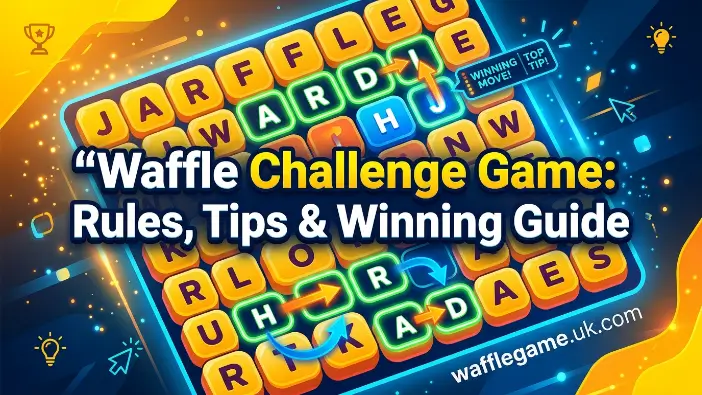
Learning how to play the waffle challenge game is simple, but mastering it requires strategy and careful planning. The puzzle challenges players to rearrange scrambled letters inside a waffle-shaped grid to create correct horizontal and vertical words. Unlike ordinary word games that focus only on guessing, this puzzle depends on logical thinking and efficient swapping techniques. Players must analyze clues, identify word patterns, and solve intersecting words while staying within a limited number of moves. Understanding the gameplay system properly can help beginners improve quickly and achieve better scores in daily challenges.
Understanding the Color Clues
The color clue system in the waffle challenge game helps players understand which letters are correctly placed and which need repositioning. Similar to Wordle, the puzzle uses multiple colors to guide players during gameplay. These clues are essential because they reduce confusion and help players identify possible word combinations more efficiently. Beginners who learn how to interpret color hints correctly usually solve puzzles much faster and with fewer swaps.
Green letters are the easiest clues to understand because they are already in the correct position. Yellow letters indicate that the character belongs somewhere else inside the puzzle grid, while gray letters often confuse new players because they may already be connected to another completed word. Paying close attention to these color signals is one of the most important strategies in the waffle challenge game because every clue directly affects your next move.
Color Clue Meanings
- Green Letters
- Correct letter in the correct position
- Usually should not be moved
- Help build surrounding words faster
- Yellow Letters
- Correct letter but wrong location
- Must be repositioned carefully
- Useful for identifying intersections
- Gray Letters
- May already belong to another solved word
- Can create confusion for beginners
- Require careful analysis before swapping
Move Limits and Star Ratings
The waffle challenge game becomes more challenging because players receive a limited number of swaps to solve the puzzle. In most versions, players get 15 total moves to rearrange all letters into their correct positions. Every unnecessary move reduces the final score, so planning is extremely important. The game rewards efficiency and strategic thinking instead of random guessing, which makes each completed puzzle feel more satisfying.
Star ratings are earned based on how many swaps remain after solving the puzzle. Players who complete challenges with extra moves left receive higher ratings and better overall performance scores. Competitive players often try to solve puzzles using the fewest possible swaps to achieve perfect results. Efficient move management is one of the key skills needed to master the waffle challenge game and consistently improve daily performance.
How the Rating System Works
- Players usually receive 15 swaps
- Fewer moves used means a better score
- Remaining swaps increase star ratings
- Perfect solutions require advanced planning
- Random swapping often lowers final ratings
Typical Star Performance
- 5+ moves left = Excellent performance
- 3–4 moves left = Great score
- 1–2 moves left = Good completion
- 0 moves left = Puzzle solved with no extra efficiency
Step-by-Step Gameplay Process
The best way to solve the waffle challenge game is by following a structured solving process instead of making random moves. Successful players begin by studying the entire board carefully before making their first swap. Since the puzzle contains intersecting horizontal and vertical words, every move affects multiple sections of the board. Strategic planning is essential because solving one word can often help complete another automatically.
Advanced players focus on identifying patterns, confirming letter placements, and optimizing swaps throughout the puzzle. Blog they rarely move letters without understanding how the change affects surrounding words. By using a systematic approach, players can reduce mistakes, preserve swaps, and complete puzzles much more efficiently. Consistent practice with these techniques helps improve both speed and accuracy in the waffle challenge game.
Step-by-Step Solving Strategy
- Analyze Fixed Letters
- Start with all green letters
- Use them as anchors for nearby words
- Identify obvious word patterns
- Identify Misplaced Letters
- Study yellow clues carefully
- Find possible new positions
- Look for common letter combinations
- Solve Intersecting Words
- Focus on shared letters first
- Complete multiple words simultaneously
- Use intersections to reveal hidden patterns
- Optimize Swaps
- Avoid unnecessary moves
- Plan several steps ahead
- Make swaps that improve multiple words together
Best Strategies to Win Faster
Winning consistently in the waffle challenge game requires more than basic vocabulary knowledge. Players must combine logical thinking, pattern recognition, and strategic planning to complete puzzles efficiently within the limited swap count. Since every move affects multiple words inside the waffle grid, random gameplay usually leads to wasted swaps and lower scores. The most successful players approach each puzzle methodically by studying clues, predicting outcomes, and solving connected words together. Learning advanced strategies can dramatically improve solving speed, increase star ratings, and help players complete daily puzzles with far fewer mistakes over time.
Start With Green Letters
One of the most effective strategies in the waffle challenge game is beginning with green letters because they already appear in their correct positions. These fixed letters act as anchors that help players identify possible word structures quickly. Instead of focusing on every scrambled tile at once, experienced players use green clues to narrow down potential solutions and reduce confusion across the board. This organized approach creates a stronger foundation for solving the rest of the puzzle efficiently.
Green letters also make it easier to recognize common prefixes, suffixes, and repeating patterns inside intersecting words. For example, if a word already contains correctly placed vowels or endings like “ING” or “ER,” players can predict nearby letters more accurately. Using confirmed positions early prevents unnecessary swaps and improves move efficiency. In difficult puzzles, carefully analyzing green tiles often reveals hidden word combinations that beginners usually miss while rushing through the board.
Solve Intersections First
Intersections are one of the most important mechanics in the waffle challenge game because one letter contributes to both a horizontal and vertical word simultaneously. Solving these shared positions first provides valuable clues that help unlock multiple sections of the puzzle at the same time. Players who prioritize intersections often complete boards faster because every correct move creates additional progress across connected words.
Another advantage of focusing on intersections is improved swap efficiency. A single correct placement can instantly fix two words instead of one, reducing the total number of swaps needed to finish the puzzle. Skilled players constantly analyze how each letter affects surrounding words before making a move. This strategy becomes especially helpful in advanced puzzles where efficient planning and board awareness are necessary for achieving perfect scores and higher star ratings.
Track Repeating Letters
Repeating letters can either help or confuse players in the waffle challenge game, depending on how carefully they are analyzed. Many puzzles contain duplicate vowels or consonants, and recognizing them early prevents incorrect assumptions during gameplay. Players who fail to track repeated letters often waste moves by placing identical characters in the wrong locations multiple times.
Experienced players carefully study letter frequency and common word structures to identify where repeated characters likely belong. Letters such as E, S, R, and A commonly appear more than once in English words, making them important clues during puzzle solving. Understanding these patterns improves speed, reduces confusion, and helps players predict possible solutions more effectively. Tracking duplicate letters also strengthens long-term pattern recognition skills for future daily challenges.
Think Multiple Swaps Ahead
Advanced players rarely make immediate moves without analyzing future outcomes first. In the waffle challenge game, thinking several swaps ahead helps players avoid breaking completed words or creating unnecessary complications later in the puzzle. Strategic planning allows users to visualize how a single move impacts multiple sections of the board before committing to the swap.
This forward-thinking approach is one of the biggest differences between beginner and expert players. Instead of reacting to each tile individually, experienced users create mini-solving plans that optimize every movement. Predicting upcoming swaps helps conserve moves, improve star ratings, and complete puzzles more efficiently. Over time, practicing this habit strengthens logical thinking and makes solving difficult waffle challenges significantly easier.
Avoid Random Swapping
Random swapping is one of the most common reasons players fail difficult puzzles in the Waffle Challenge game. Making quick, unplanned moves often creates more confusion by disrupting partially solved words and wasting valuable swaps. Beginners frequently focus on immediate changes instead of understanding the overall puzzle structure, leading to inefficient gameplay and lower scores.
Successful players take time to analyze the entire board before making important moves. They study intersections, evaluate color clues, and predict the best possible outcomes carefully. Strategic swapping not only preserves remaining moves but also improves solving accuracy and consistency. By avoiding rushed decisions and maintaining a logical approach, players can solve puzzles faster while developing stronger puzzle-solving habits for future challenges.
Common Mistakes Players Make
Many players struggle in the waffle challenge game not because the puzzle is impossible, but because they repeat common solving mistakes that waste moves and create confusion. Since the game combines vocabulary skills with strategic thinking, even small errors can affect the entire board. Beginners often rush through puzzles without properly analyzing intersections, color clues, or future swap outcomes. Understanding these mistakes is important because avoiding them can instantly improve solving speed, accuracy, and final scores. Players who develop a more organized and patient approach usually perform much better in daily waffle challenges and advanced puzzle modes.
Ignoring Intersections
One of the biggest mistakes in the waffle challenge game is ignoring word intersections while solving the puzzle. Because horizontal and vertical words share letters, intersections provide the strongest clues on the board. Many beginners focus only on completing individual words and fail to notice how one correct placement can solve multiple positions at the same time. This often results in unnecessary swaps and slower puzzle completion.
Experienced players prioritize shared letters because they help reveal hidden word patterns faster. Solving intersections early creates a chain reaction that simplifies nearby sections of the puzzle. Players who ignore this strategy usually spend extra moves fixing avoidable mistakes later. Carefully studying intersecting words before swapping letters can dramatically improve efficiency and reduce confusion during difficult challenges.
Wasting Swaps Too Early
Another common problem in the waffle challenge game is using too many swaps during the opening stage of the puzzle. Beginners often make quick moves without analyzing the board fully, which reduces flexibility later in the game. Since players only receive a limited number of swaps, poor move management can quickly make the puzzle impossible to complete perfectly.
Skilled players usually spend time studying color clues and possible word structures before making their first swap. This careful approach helps conserve moves and improves long-term puzzle control. Planning also allows players to solve multiple positions with single swaps instead of making unnecessary corrections later. Efficient swap management is one of the most important habits for improving puzzle performance.
Misreading Yellow Tiles
Yellow tiles frequently confuse beginners in the waffle challenge game because the letters belong somewhere in the puzzle but not in their current positions. Many players incorrectly assume yellow letters belong nearby, leading to wrong placements and wasted swaps. Misunderstanding these clues often creates additional errors across intersecting words.
Advanced players treat yellow letters as flexible clues rather than immediate answers. They analyze surrounding word patterns carefully before deciding where the letters should move. Understanding common prefixes, suffixes, and letter combinations makes yellow clues much easier to interpret. Properly reading these tiles improves solving accuracy and prevents unnecessary puzzle complications.
Focusing on One Word Only
Many players make the mistake of concentrating on a single word while ignoring the rest of the puzzle. In the waffle challenge game, all words are interconnected, meaning every move affects multiple sections simultaneously. Solving one word completely without considering nearby intersections often limits future move options and creates inefficient gameplay.
Successful players constantly evaluate the entire board instead of working in isolated sections. They balance progress across multiple words and prioritize moves that improve several positions together. This broader strategy helps conserve swaps and creates smoother puzzle progression. Learning to think about the puzzle as a connected system is essential for mastering advanced waffle-solving techniques.
Waffle Challenge Game vs Other Word Games
The waffle challenge game has become one of the most popular online puzzle games because it combines vocabulary building with strategic problem-solving. While many word games focus mainly on guessing hidden words, Waffle introduces a more interactive gameplay style where players rearrange letters using limited swaps. This unique mechanic makes the experience more tactical and mentally engaging compared to several traditional puzzle games. As daily word challenges continue growing in popularity, many players compare Waffle with games like Wordle, Quordle, and Connections to determine which offers the best combination of difficulty, entertainment, and brain-training value.
Waffle vs Wordle
The biggest difference between the waffle challenge game and Wordle is the gameplay system itself. Wordle asks players to guess a hidden word within a limited number of attempts, while Waffle already provides all the letters needed to solve the puzzle. Instead of guessing, players must strategically rearrange scrambled letters into correct positions. This creates a more logic-based challenge that rewards planning and pattern recognition rather than trial-and-error guessing.
Another major advantage of Waffle is its intersecting word structure. In Wordle, players solve only one word at a time, but Waffle includes multiple connected words that influence each other. This makes the puzzle more dynamic and strategic because every swap affects several parts of the board simultaneously. Many players enjoy the waffle challenge game because it feels more interactive and mentally demanding compared to the simpler structure of Wordle.
Waffle vs Quordle
Quordle increases difficulty by requiring players to solve four hidden words at once, making it more challenging than Wordle for many users. However, the waffle challenge game introduces a different type of complexity through letter-swapping mechanics and shared intersections. Instead of typing guesses repeatedly, players must carefully plan efficient swaps to solve interconnected words within limited moves.
Another key difference is puzzle visibility. In Quordle, players gradually discover information through guesses, while Waffle displays all letters from the beginning. This shifts the focus from deduction to strategic arrangement and optimization. Many puzzle enthusiasts prefer Waffle because it rewards logical movement planning rather than repeated guessing attempts. The combination of visual structure and strategic gameplay gives Waffle a unique identity among modern word games.
Waffle vs Connections
Connections focuses on grouping related words into categories, while the waffle challenge game centers around vocabulary structure and letter positioning. Although both games test thinking skills, they challenge the brain in very different ways. Connections relies more on association and category recognition, whereas Waffle emphasizes logical analysis, spelling patterns, and move efficiency.
Players who enjoy strategic word construction often prefer Waffle because it combines puzzle-solving with movement-based gameplay. The intersecting word design creates a deeper level of complexity that many users find more rewarding over time. On the other hand, Connections appeals more to players who enjoy thematic thinking and relationship-based puzzles. Both games are excellent for brain training, but the waffle challenge game offers a more structured and strategy-focused experience.
Comparison Table
| Feature | Waffle | Wordle | Quordle |
| Gameplay Style | Letter Swapping | Word Guessing | Multi-Word Guessing |
| Number of Words | Six Connected Words | One Word | Four Words |
| Puzzle Structure | Intersecting Grid | Single Row | Multiple Grids |
| Strategy Level | High | Medium | High |
| Move Management | Important | Not Required | Limited Guesses |
| Visual Complexity | Advanced | Simple | Moderate |
| Brain Training Focus | Logic + Vocabulary | Vocabulary | Deduction Skills |
Benefits of Playing the Waffle Challenge Game
The waffle challenge game is more than just an entertaining online puzzle because it also provides several mental and cognitive benefits for players of all ages. The game combines vocabulary building, strategic planning, and logical problem-solving into a single daily challenge that keeps the brain active and engaged. Since players must analyze patterns, manage swaps, and solve intersecting words efficiently, the puzzle encourages deeper thinking compared to many traditional word games. Regularly playing the waffle challenge game can improve concentration, sharpen memory, and strengthen language skills while still feeling fun and rewarding for casual and competitive players alike.
Improves Vocabulary
One of the biggest advantages of the waffle challenge game is its ability to improve vocabulary naturally through repeated exposure to different word structures. Players encounter new letter combinations, prefixes, suffixes, and common English words during daily gameplay. Over time, recognizing these patterns becomes easier, which helps expand both spelling knowledge and word recognition skills.
The game also encourages players to think critically about possible word formations instead of relying on random guessing. Because all words connect within the waffle grid, users develop a stronger understanding of language structure and letter placement. Regular practice can improve reading confidence, spelling accuracy, and overall familiarity with vocabulary used in everyday communication.
Enhances Logical Thinking
The waffle challenge game requires players to think strategically before making moves, which helps strengthen logical thinking abilities. Every swap affects multiple sections of the puzzle, meaning users must carefully evaluate possible outcomes before changing letter positions. This problem-solving process trains the brain to approach challenges more analytically and efficiently.
Players also learn how to identify patterns, predict future moves, and avoid unnecessary mistakes while solving puzzles. These logical decision-making habits become stronger over time through consistent gameplay. Many users enjoy the game because it offers a mental challenge that combines reasoning skills with entertainment in a highly interactive way.
Strengthens Pattern Recognition
Pattern recognition is one of the most important skills developed while playing the waffle challenge game. Players constantly analyze letter arrangements, repeated characters, and common word endings to solve puzzles more efficiently. As users become familiar with these structures, they begin recognizing possible solutions much faster than beginners.
This ability to identify visual and language-based patterns improves with daily practice. Experienced players often notice repeated word structures immediately, allowing them to complete puzzles using fewer swaps. Stronger pattern recognition not only improves game performance but also supports faster thinking and better cognitive processing in other problem-solving situations.
Daily Brain Training Benefits
Many players use the waffle challenge game as part of their daily mental exercise routine because it keeps the brain active and engaged. Solving puzzles regularly can improve concentration, memory retention, and mental flexibility while providing a relaxing and enjoyable activity. Unlike repetitive mobile games, Waffle challenges users to think critically and stay mentally focused throughout the puzzle.
Daily gameplay also encourages discipline and consistent cognitive activity. Short puzzle sessions provide quick mental stimulation without becoming overwhelming or stressful. Over time, these small brain-training exercises can help maintain sharper thinking skills and improve overall mental agility, making the game both entertaining and beneficial for long-term cognitive health.
Advanced Tips for Competitive Players
Competitive players often approach the waffle challenge game very differently from casual users because they focus on speed, accuracy, and move efficiency. While beginners usually solve puzzles through trial and error, advanced players rely on pattern recognition, strategic planning, and experience with common word structures. The ability to predict letter placements quickly and optimize every swap becomes extremely important when aiming for perfect scores or faster completion times. Developing advanced solving habits not only improves daily puzzle performance but also helps players handle more difficult waffle challenges with greater consistency and confidence over time.
Memorize Common Word Structures
One of the best ways to improve in the waffle challenge game is to memorize common English word structures and letter combinations. Experienced players quickly recognize endings like “ING,” “TION,” “ER,” and “ED,” which helps them predict possible solutions faster. Understanding these recurring patterns reduces guesswork and makes it easier to identify correct word placements during difficult puzzles.
Learning common prefixes and suffixes also improves solving speed because players can mentally narrow down possible words immediately after spotting a few fixed letters. Competitive users often train themselves to recognize frequently used five-letter structures automatically. This habit strengthens vocabulary awareness and allows faster puzzle analysis during daily waffle challenges and advanced gameplay sessions.
Practice Unlimited Mode
Unlimited mode is one of the most useful training tools for improving performance in the waffle challenge game. Instead of waiting for one daily puzzle, players can solve multiple boards continuously and experiment with different solving strategies. Frequent practice helps users become more familiar with letter patterns, intersections, and efficient swap techniques.
Competitive players often use unlimited mode to improve reaction speed and reduce solving mistakes. Repetition builds stronger puzzle instincts and teaches players how to manage difficult boards more effectively. Over time, regular practice also increases confidence and allows players to complete puzzles faster while using fewer unnecessary swaps.
Analyze Previous Puzzles
Reviewing older puzzles is another valuable strategy for mastering the waffle challenge game. Previous boards often contain recurring patterns, repeated word structures, and similar solving techniques that can help players improve future performance. Studying completed puzzles also reveals common mistakes and highlights more efficient swap paths.
Advanced players frequently analyze how certain moves could have been optimized to save additional swaps. This self-review process improves strategic thinking and helps identify stronger problem-solving habits. Understanding why certain solutions worked better than others allows competitive users to refine their approach and achieve more consistent high-level results
Improve Swap Efficiency
Swap efficiency is one of the most important skills in the waffle challenge game because players have limited moves available to complete each puzzle. Strong players avoid unnecessary swaps and focus on moves that improve multiple word positions simultaneously. Efficient gameplay often separates average users from top-performing competitive players.
Improving swap efficiency requires patience, planning, and careful board analysis before making moves. Expert players usually visualize several steps ahead and avoid changing solved sections unless necessary. This strategic mindset reduces wasted movements and increases the chances of achieving perfect scores with extra swaps remaining at the end of the puzzle.
Where to Play the Waffle Challenge Game Online
Finding reliable websites to play the waffle challenge game online is important for enjoying smooth gameplay and accessing daily puzzle updates. The game is widely available through browser-based platforms that allow users to play instantly without downloading software or creating accounts. Many players prefer online versions because they provide quick access to daily challenges, unlimited practice modes, and archived puzzles from previous days. Whether you are a beginner learning the basics or an advanced player aiming for perfect scores, choosing the right platform can improve your overall gameplay experience and make practicing more convenient.
Official Daily Version
The official version of the waffle challenge game is the most popular choice for players who enjoy solving a new puzzle every day. This version usually includes the standard waffle grid, limited swap system, and score-sharing features that allow users to compare results with friends or online communities. Daily puzzles are refreshed automatically, creating a consistent challenge that keeps players engaged regularly.
Many users prefer the official daily mode because it maintains balanced difficulty and fair gameplay mechanics. The puzzle design encourages strategic thinking while remaining accessible to beginners. Since the challenge changes every day, players continuously encounter fresh word combinations and different solving situations that improve vocabulary and puzzle-solving skills over time.
Unlimited Puzzle Modes
Unlimited versions of the waffle challenge game are ideal for players who want continuous practice without waiting for the next daily puzzle. These modes generate new boards repeatedly, allowing users to improve strategies, experiment with solving techniques, and strengthen pattern recognition skills through repetition.
Competitive players often use unlimited mode to practice faster solving methods and improve swap efficiency. The ability to play multiple puzzles in one session helps users become more comfortable with difficult intersections and advanced word structures. Unlimited gameplay is especially useful for players preparing to compete for better scores in daily waffle challenges.
Mobile-Friendly Options
Most versions of the waffle challenge game are fully optimized for smartphones and tablets, making them easy to play on mobile browsers. Players can enjoy puzzles anywhere without downloading apps or installing extra software. Touchscreen controls also make letter swapping smooth and convenient on smaller devices.
Mobile-friendly gameplay has helped the game become even more popular among casual users who enjoy quick daily brain-training sessions during free time. Whether playing on desktop or mobile, the puzzle experience remains simple, responsive, and accessible. This flexibility allows users to practice regularly and stay connected to daily waffle challenges from virtually any device.
Frequently Asked Questions
Is the waffle challenge game free to play?
Yes, the waffle challenge game is completely free on most online platforms and can be played directly in a web browser without downloads or subscriptions.
How many swaps do players get in the game?
Most versions of the waffle challenge game provide 15 total swaps to solve all six hidden words inside the waffle grid.
Can I play previous waffle puzzles?
Yes, many websites offer archive sections where players can access older daily puzzles and practice past challenges anytime.
Is the waffle challenge game harder than Wordle?
Many players consider the waffle challenge game more challenging because it involves strategic letter swapping, intersecting words, and move management instead of simple guessing.
Does the game work on mobile devices?
Yes, the waffle challenge game is mobile-friendly and works smoothly on smartphones, tablets, laptops, and desktop browsers.
Conclusion
The waffle challenge game has become one of the most engaging online word puzzles because it combines vocabulary skills, logical thinking, and strategic gameplay in a unique waffle-shaped format. Unlike traditional guessing games, players must carefully rearrange letters, solve intersecting words, and manage limited swaps to complete each puzzle successfully. This combination of challenge and creativity makes the game enjoyable for both casual players and competitive puzzle enthusiasts.
Regularly playing the waffle challenge game can improve vocabulary, strengthen pattern recognition, and enhance problem-solving abilities while providing daily mental exercise. Whether you are practicing in unlimited mode, competing for perfect scores, or simply enjoying daily challenges, learning advanced strategies and avoiding common mistakes can greatly improve your performance. With its growing popularity and rewarding gameplay mechanics, the game continues to stand out as one of the best modern word puzzle experiences available online.