
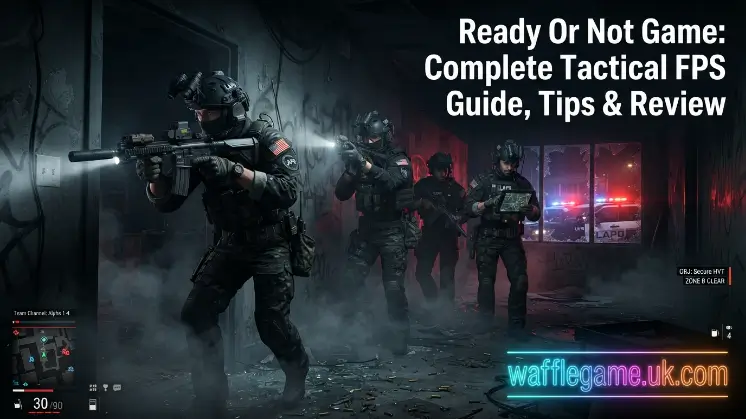
The Ready or Not game is a popular tactical first-person shooter that offers a realistic and challenging experience for players who enjoy strategic police operations, teamwork, and intense missions. Unlike traditional FPS games that often focus on fast-paced movement and constant action, Ready or Not emphasizes patience, careful planning, communication, and making the right decisions under pressure.
Set around realistic law-enforcement situations, the Ready or Not game puts players in the role of a SWAT operator tasked with handling dangerous and unpredictable incidents. Missions can range from hostage rescues and building searches to high-risk raids and armed confrontations, with each situation requiring a different approach. Players must assess the environment, communicate with teammates, manage their equipment, and carefully execute their objectives.
What Is the Ready or Not Game?
The Ready or Not game is a realistic tactical first-person shooter developed by VOID Interactive, focusing on SWAT-style operations, challenging scenarios, and carefully planned missions. Instead of rushing into every encounter, players are encouraged to study the situation, select suitable equipment, communicate with teammates, and make thoughtful decisions that can affect the progress and outcome of an operation.
Drawing inspiration from classic tactical shooters such as the SWAT series, the game places a strong focus on realism, immersion, teamwork, and strategic gameplay. Missions can unfold in unpredictable ways, and even a small mistake can create additional challenges. Because of this, patience, coordination, and careful decision-making are important parts of successfully completing each operation.
The Main Concept Behind Ready or Not
The basic concept of the Ready or NotThe core concept of the Ready or Not game is simple: you take on the role of a tactical police officer responding to dangerous, unpredictable, and high-pressure situations. Whether you are a newcomer learning the basics of tactical gameplay or an experienced FPS player searching for a more demanding challenge, this guide covers the key aspects of the game, including gameplay mechanics, weapons, multiplayer features, and practical strategies.
Missions can involve a wide range of challenging scenarios, including:
- Hostage rescue operations
- Encounters with armed suspects
- Bomb threats and potential explosive situations
- Criminal investigations
- High-risk building searches and tactical entries
Each mission presents its own set of challenges and requires players to adjust their approach accordingly. Some situations may call for direct tactical action, while others can be handled more effectively through negotiation, careful communication, or the use of non-lethal equipment.
Why Players Enjoy This Tactical Shooter
Several features help make the Ready or Not game stand out from other tactical FPS titles. The game combines realistic mechanics, detailed environments, and team-focused gameplay to create a tense and immersive experience.
Key features incSome of the key features that make the Ready or Not game stand out include:
- Realistic and tactical gameplay
- Detailed and immersive environments
- Strong teamwork and communication mechanics
- Challenging missions with unpredictable situations
- A tense and immersive atmosphere
The game’s slower and more methodical pace creates a constant feeling of suspense. Players cannot simply rush through an area without considering the possible risks. Every doorway, hallway, and corner can hide an unexpected threat, making awareness and preparation essential.
Ready or Not Gameplay Features Explained
One of the biggest strengths of the Ready or Not game is its focus on realistic tactical operations, where careful planning, teamwork, and smart decision-making are essential. Unlike many traditional FPS games that reward players for rushing into combat and relying mainly on quick reflexes, Ready or Not encourages a slower and more thoughtful approach. Players must observe their surroundings, assess potential risks, and decide how to handle each situation before taking action.
Before entering a mission, players need to consider the scenario, choose appropriate equipment, and coordinate with their teammates. During an operation, communication and situational awareness remain important, as unexpected events can quickly change the situation. A poorly planned move or careless decision can make an already difficult mission even more challenging.
Realistic Tactical Missions
The Ready or Not game features a wide range of mission scenarios, each requiring a different tactical approach. From hostage situations and armed suspects to bomb threats and high-risk building searches, every operatioEach mission in Ready or Not presents its own set of challenges, helping keep the gameplay varied and engaging. Players may encounter different objectives and situations that require them to adapt their tactics rather than follow the same approach every time.
Common mission objectives include:
- Clearing buildings occupied by suspects
- Rescuing and protecting hostages
- Investigating suspicious locations
- Responding to dangerous or high-risk threats
Players cannot rely on shooting ability alone to complete these operations successfully. Instead, missions encourage careful planning, proper preparation, and controlled execution. Before entering a location, operators can evaluate the situation, select suitable equipment, plan their entry strategy, and consider possible threats they may encounter inside.
Team-Based Squad Gameplay
Teamwork is a key part of the Ready or Not game, as players must assess their surroundings, select the right equipment, and determine the most effective way to accomplish each objective. Some situations may call for a careful, non-lethal approach, while others require a quicker and more coordinated tactical response.This variety encourages players to adapt their strategies and tactics instead of using the same approach for every mission. Different situations may require different team formations, commands, and methods of entry, making coordination an important part of the overall experience.
Players can:
- Give commands to AI-controlled teammates
- Coordinate with other players in online multiplayer
- Assign tactical roles and positions
- Organize and manage room-clearing procedures
Communication becomes particularly important during multiplayer operations. Teammates can share information, coordinate movements, and work together to complete objectives more efficiently. Rather than relying on individual actions, players are encouraged to communicate clearly and support one another throughout the mission.
Weapons and Equipment System
The Ready or Not game offers a variety of weapons and tactical equipment, allowing players to customize their loadout according to the mission and situation. Different scenarios may call for different tools, so selecting the right equipment before an operation can have a major impact on how effectively players handle each challenge.
Players can choose from a range of weapons, including:
- Assault rifles
- Shotguns
- Handguns
- SMGs
- Less-lethal weapons
Tactical equipment includes:
- Flashbangs
- Door wedges
- Ballistic shields
- Tactical armor
- Restraints
Choosing a suitable loadout helps players prepare for different mission objectives and unexpected situations. Rather than using the same equipment every time, players can adjust their setup based on the environment, objectives, and level of tactical difficulty.
Read Also: Scotland Game
Ready or Not Game Modes and Missions
The Ready or Not game offers flexible gameplay options that allow players to experience tactical operations in a way that suits their preferred playstyle. Whether you enjoy handling missions independently or working closely with a team, each operation emphasizes careful planning, communication, and thoughtful decision-making.
Players can experience SWAT-style missions through single-player mode, where AI-controlled teammates provide support during operations, or participate in multiplayer co-op sessions with friends and other players. Each mode brings its own challenges and gives players opportunities to improve their tactical awareness and overall gameplay skills.
Single Player Mode
Players who prefer a solo experience can take on missions with AI-controlled teammates. This mode provides a useful enSingle-player mode provides a useful environment for learning the game’s mechanics, experimenting with different tactics, and becoming familiar with various maps before joining online operations. It gives players the freedom to take their time, understand how different systems work, and gradually develop their tactical skills without depending on other human players.
The single-player experience allows players to:
- Practice different tactical strategies
- Explore and learn mission maps
- Test various equipment and loadouts
- Improve situational awareness and decision-making
AI teammates can follow player commands and assist during operations, making it possible to coordinate missions without requiring an online team. For beginners, this mode offers a comfortable way to understand the game’s mechanics, practice tactical approaches, and build confidence before moving into multiplayer co-op missions. It can also be useful for experienced players who want to test new strategies or equipment setups in a controlled environment.
Multiplayer Co-Op Mode
Multiplayer co-op is one of the standout features of the Ready or Not game, allowing players to team up with friends or other players and tackle challenging SWAT-style missions together. This mode adds a strong focus on comMultiplayer gameplay places greater emphasis on communication, coordination, and teamwork, making each operation feel more dynamic and unpredictable. Players need to work together, share information, and adjust their tactics as situations change throughout a mission.
Successful teams generally focus on:
- Clear and consistent communication
- Effective positioning and movement
- Controlled and coordinated actions
- Sharing responsibilities among teammates
Working as a team allows players to coordinate their movements, respond to unexpected situations, and complete objectives more efficiently. Each player can contribute to the operation by taking on specific responsibilities and supporting teammates when needed.
Read more: Blog
Mission Variety and Replay Value
Each mission in the Ready or Not game presents different challenges, giving players plenty of reasons to return and try new approaches. The game supports both solo and team-based play, allowing players to experimPlayers can approach each operation with different strategies depending on their preferred playstyle and the challenges presented by the mission. This flexibility allows them to experiment with different tactics and find approaches that work best for specific situations.
Players can improve their overall performance by:
- Developing more effective tactical strategies
- Completing mission objectives more efficiently
- Testing different equipment and loadout combinations
- Exploring alternative approaches to individual missions
As players become more familiar with the maps, gameplay mechanics, and tactical systems, they can gradually improve their decision-making and situational awareness. Trying different methods can also reveal new ways to manage difficult encounters and complete objectives.
Best Beginner Tips for the Ready or Not Game
New players may find the Ready or Not game challenging at first, particularly if they are accustomed to traditional FPS titles where quick reactions and aggressive gameplay are often rewarded. Ready or Not takes a more deliberate approach, encouraging players to slow down, observe their surroundings, assess potential risks, and think carefully before taking action.
Rushing into rooms, ignoring possible threats, or moving forward without a clear plan can quickly make an operation more difficult. Instead, beginners should focus on learning the environment, communicating with teammates, selecting suitable equipment, and carefully planning each stage of the mission.
Plan Before Entering a Mission
Preparation plays an essentiaCareful planning plays an important role in the Ready or Not game, as preparation can have a major impact on how smoothly an operation progresses. Before entering a potentially dangerous location, players should understand the mission objectives, select appropriate weapons and equipment, and consider the possible challenges they may encounter.
Before starting a mission, make sure to:
- Review and understand the mission objectives
- Select suitable weapons and equipment
- Identify potential threats and risks
- Coordinate roles and plans with your teammates
Taking time to prepare gives players a clearer strategy before the operation begins and can help reduce unnecessary mistakes. A well-organized plan also makes it easier for teammates to coordinate their actions, respond to unexpected situations, and manage challenging objectives more effectively.
Avoid Rushing Into Buildings
Taking time to plan can help players reduce unnecessary risks and handle challenging situations more In the Ready or Not game, thoughtful movement and situational awareness are essential for handling missions effectively. Choosing the right equipment, understanding the surrounding environment, and staying coordinated with teammates can often be more useful than simply relying on quick reactions.
Players should focus on:
- Checking corners and surrounding areas carefully
- Opening doors cautiously and assessing what is beyond them
- Using appropriate equipment when approaching risky areas
- Staying close to teammates and maintaining coordination
Instead of rushing through a mission, players should maintain slow, controlled, and deliberate movement. A patient approach gives the entire team more time to observe the environment, communicate important information, and react to unexpected situations.
Use Non-Lethal Equipment Effectively
Non-lethal tools can be useful for handling certain situations while giving players more tactical options. In the Ready or Not game, choosing the right equipment before a mission allows players to respond to different cUsing the right equipment can help players manage challenging situations more effectively in the Ready or Not game. Tactical and non-lethal tools provide different options for handling encounters, allowing players to adapt their approach based on the mission objectives and the environment.
Examples of tactical and non-lethal equipment include:
- Flashbangs to temporarily disorient suspects and create an opportunity for the team to move
- Pepper spray for managing certain close-range encounters
- Door wedges to help control access points and limit movement through specific areas
Choosing the appropriate equipment for each mission can make difficult situations easier to manage. Players should consider the objectives, map layout, and potential challenges before selecting their loadout. A well-planned equipment setup can support a more controlled approach and give teams greater flexibility when responding to changing situations.
Communicate With Your Team
CommunicatioCommunication is particularly important during multiplayer missions, where coordinated teamwork can strongly influence how an operation progresses. In the Ready or Not game, players should keep their teammates informed, remain aware of everyone’s position, and clearly communicate their plans before taking action.
Effective teams should:
- Share information about suspect locations and potential threats
- Announce movements and planned actions
- Coordinate room-clearing and entry procedures
- Avoid unnecessary risks and impulsive decisions
Clear communication helps the team stay organized and react more effectively when unexpected situations arise. Instead of operating independently, players who communicate consistently and support one another can coordinate their actions more efficiently and work toward completing mission objectives as a team.
Common Mistakes New Players Make in Ready or Not
New players may initially find the Ready or Not game challenging because its tactical gameplay is quite different from many traditional FPS titles. Success depends on more than quick reactions and shooting accuracy; players also need to develop patience, planning skills, situational awareness, and effective teamwork.
One of the main challenges for beginners is adjusting to the game’s realistic and methodical pace. Rushing through an operation or making decisions without properly assessing the situation can lead to avoidable mistakes. Instead, players should take their time, communicate with teammates, observe their surroundings, and carefully consider each step before moving forward.
Playing Like a Traditional FPS
One of the most common mistakes players make in the Ready or Not game is moving too quickly, firing without carefully assessing the situation, or overlooking the importance of tactical planning. Unlike many traditional FPS titles where aggressive gameplay can sometimes work, Ready or Not places greater emphasis on patience, awareness, preparation, and thoughtful decision-making.
Rushing into an unfamiliar area without properly checking the surroundings can create unnecessary risks for the entire team. Players should instead approach each operation in a controlled and methodical way. Observing the environment, communicating with teammates, identifying potential threats, and planning the next move can help the team stay better prepared.
Ignoring Team Coordination
Working alone can create unnecessary difficulties in the Ready or Not game, where teamwork and coordination are important for handling tactical operations effectively. Moving too far away from the squad can leave players without immediate support, cause them to miss important information, and make unexpected situations more difficult to manage.
A better approach is to remain close to teammates and maintain clear communication throughout the mission. Players should inform the squad before entering a new area, share useful information about potential threats, and coordinate their movements when completing objectives.
Choosing the Wrong Equipment
Using unsuitable weapons or tactical equipment can make missions more difficult in the Ready or Not game, as different operations may require different approaches. Beginners may sometimes choose their loadout based mainly on personal preference without considering the mission objectives, environment, or potential challenges they could encounter.
A poorly matched loadout can limit the team’s options and make certain situations harder to handle. Players should therefore review the objectives and consider the conditions of each mission before selecting their weapons and tactical equipment.
Ready or Not vs Other Tactical FPS Games
A reliable way to approach the Ready or Not game is to treat every mission as a carefully planned tactical operation. Players should maintain a controlled pace, communicate consistently with teammates, assess possible threats, and think through their actions before moving forward. Taking time to observe the environment and prepare for different situations can be more effective than rushing into areas without knowing what to expect.
Selecting suitable equipment before the operation is another important part of preparation. A well-planned loadout provides players with the tools needed to handle different challenges and approach mission objectives more effectively. Equipment choices should match the objectives and conditions of the specific operation.
| Feature | Ready or Not | Traditional FPS Games |
| Gameplay Style | Tactical and realistic | Fast-paced action |
| Strategy | Very important | Less important |
| Teamwork | Essential | Optional |
| Realism | High | Medium |
| Learning Curve | Challenging | Easier |
The biggest difference is that the Ready or Not game emphasizes strategic decision-making and careful planning rather than simply defeating enemies.
Future Updates, Mods, and Community Support
The Ready or Not game continues to attract a dedicated community of tactical shooter fans. Beyond the base game, community-created content can provide players with fresh ways to experience missions and experiment with different gameplay ideas.The Ready or Not game also benefits from community contributions, with players creating additional content that can expand and refresh the overall experience. Community-made content can introduce new ideas, scenarios, and customization options that give players more ways to enjoy the game.
Community contributions may include:
- Custom missions and scenarios
- Gameplay modifications and adjustments
- New tactical situations
- Creative content and customization ideas
Mods can add variety by introducing fresh challenges, gameplay changes, and additional customization possibilities. For players who have already explored the standard game content, community-created additions can offer new ways to experiment with different approaches and keep missions feeling fresh.
Frequently Asked Questions
Is Ready or Not a multiplayer game?
Yes, the game includes multiplayer co-op features where players can work together in tactical missions. Communication and teamwork are important for success.
Is Ready or Not available on console?
The game has primarily been designed for PC, and players should check official announcements for future platform releases.
Is Ready or Not beginner-friendly?
The game has a learning curve, but beginners can improve quickly by practicing missions, learning maps, and using tactical strategies.
What type of game is Ready or Not?
It is a tactical first-person shooter focused on realistic SWAT-style operations, teamwork, and strategic gameplay.
Can you play Ready or Not solo?
Yes, players can complete missions alone with AI teammates supporting them.
Conclusion
The Ready or Not game delivers a realistic tactical FPS experience designed for players who enjoy strategy, teamwork, and careful planning. Rather than focusing on fast-paced combat, the game emphasizes realistic operations, squad coordination, situational awareness, and thoughtful decision-making. Players need to communicate effectively, select appropriate equipment, and approach each situation patiently to complete their objectives.
The game can present a learning curve for newcomers, particularly those who are more familiar with traditional action-focused shooters. However, taking the time to understand its mechanics, practice tactical movement, improve communication, and experiment with different equipment can help players become more confident and effective during operations.