
Welcome to WaffleGame! A managed security service provider (MSSP) is a professional cybersecurity service that helps businesses protect their networks, digital systems, and sensitive information without the need to maintain a large in-house security team. As cyber threats such as ransomware, phishing attacks, and data breaches continue to grow, businesses need reliable protection around the clock. MSSPs provide continuous security monitoring, threat detection, and rapid incident response through advanced technologies and experienced security professionals, helping organizations maintain strong protection 24/7.
Rather than waiting for a cyberattack to occur, a managed security service provider takes a proactive approach by identifying potential risks and vulnerabilities before they can be exploited. These services commonly use solutions such as Security Information and Event Management (SIEM), endpoint security, and threat intelligence to improve an organization’s overall security. For businesses looking to grow securely, lower security-related costs, and meet regulatory requirements such as GDPR or HIPAA, working with an MSSP can be an effective cybersecurity outsourcing solution in 2026.
What Is a Managed Security Service Provider?
A managed security service provider is an external cybersecurity company that helps businesses defend their digital infrastructure against a wide range of cyber threats. These providers handle essential security tasks such as continuous monitoring, threat detection, and incident response. Rather than maintaining a costly in-house security team, businesses can use this outsourced cybersecurity model to access skilled professionals and advanced security technologies at a more manageable cost. A managed security service provider also strengthens an organization’s overall cybersecurity framework by offering 24/7 protection and rapid responses to potential attacks across networks, cloud environments, and endpoint devices.
Definition of Managed Security Service Provider (MSSP)
A managed security service provider (MSSP) is a third-party cybersecurity company that offers outsourced security solutions to help businesses protect their digital infrastructure from evolving cyber threats. Rather than creating and managing a dedicated internal security team, organizations can rely on an MSSP to handle essential functions such as continuous monitoring, threat detection, vulnerability management, and incident response. This outsourced cybersecurity model gives businesses access to skilled security professionals and advanced technologies while reducing the cost and complexity of maintaining security operations internally.
Within today’s increasingly connected IT environments, an MSSP plays an important role in strengthening the overall cybersecurity ecosystem. It works with existing networks, cloud platforms, applications, and endpoints to provide ongoing protection and greater visibility into potential security risks. By combining modern security technologies with experienced analysts, a managed security service provider helps organizations identify threats quickly, respond to incidents efficiently, minimize security risks, and meet relevant industry and regulatory requirements.
How MSSPs Work in Real-Time Security Operations
A managed security service provider operates through a structured and always-active security An effective security framework is designed to monitor and protect an organization’s systems around the clock. This continuous security monitoring allows potential threats and suspicious activities to be identified quickly, even during nights, weekends, or outside normal business hours.
Key operational components include:
- 24/7 monitoring: MSSPs continuously monitor networks, servers, endpoints, and cloud environments to detect unusual activity, security weaknesses, or potential threats in real time.
- Threat detection and response: By using advanced analytics and threat intelligence systems, MSSPs can identify suspicious activity and respond quickly to contain threats before they cause significant damage.
- Security Event Management (SIEM): MSSPs use SIEM platforms to collect, correlate, and analyze security information from different sources. This helps security teams recognize threat patterns, generate timely alerts, and manage security incidents more effectively.
Through these processes, a managed security service provider helps organizations maintain a proactive security strategy, reduce downtime, protect sensitive data, and strengthen their overall security posture against constantly changing cyber threats.
Read also: gnome game
Why Businesses Need an MSSP in 2026
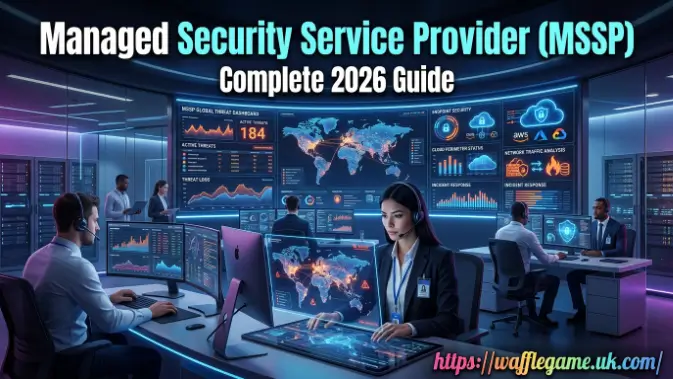
In 2026, businesses increasingly need a managed security service provider as cyber threats such as ransomware, phishing attacks, and advanced persistent threats (APT) continue to evolve. Maintaining a skilled in-house security team can also be expensive and challenging, especially for growing organizations. An MSSP provides a practical outsourced cybersecurity model that delivers 24/7 security monitoring, helps reduce operational costs, and gives businesses access to experienced cybersecurity professionals and advanced tools.
By working with a managed security service provider, organizations can strengthen their defenses while supporting secure and sustainable growth. MSSPs can also help businesses meet important security and compliance requirements, including standards and regulations such as GDPR, HIPAA, and ISO. This combination of continuous protection, expert support, and improved compliance makes managed security services a valuable option for businesses operating in today’s rapidly changing digital environment.
Rising Cyber Threat Landscape
The demand for a managed security service provider has grown considerably as the cyber threat landscape continues to change. In 2026, businesses are dealing with increasingly sophisticated attacks aimed at sensitive information, financial systems, and critical infrastructure. Because modern cybercriminals use techniques that can be difficult to identify, organizations need continuous monitoring and proactive security measures to detect threats before they cause serious harm.
- Ransomware: A managed security service provider helps organizations defend against ransomware attacks, which can lock or encrypt critical files and demand payment from victims. Since these incidents can seriously disrupt business operations, early threat detection and a rapid response are essential for limiting damage and reducing downtime.
- Phishing attacks: MSSPs help identify and block suspicious emails, messages, and links designed to steal login credentials or other sensitive information. Because phishing campaigns frequently target employees, continuous monitoring combined with security awareness can significantly reduce the risk of successful attacks.
- Advanced persistent threats (APT): A managed security service provider can help detect long-term and highly targeted attacks in which unauthorized users remain hidden within a network while attempting to access valuable information. These APT attacks require continuous monitoring, threat intelligence, and behavioral analysis to identify unusual activity and respond before the threat becomes more serious.
Cost Efficiency vs In-House Security Teams
One of the main reasons businesses turn to a managed security service provider is the potential for greater cost efficiency compared with maintaining a dedicated in-house security team. Recruiting, training, and retaining skilled cybersecurity professionals can be expensive, particularly for small and medium-sized businesses. MSSPs provide access to experienced security specialists and advanced solutions through a predictable service model, helping organizations control expenses while maintaining reliable protection.
- Hiring costs: Building an internal cybersecurity team often requires several specialists, such as security analysts, engineers, and incident response experts. A managed security service provider reduces the need for extensive recruitment and staffing by providing access to a complete security team through one service.
- Infrastructure savings: MSSPs typically operate advanced security infrastructure and specialized monitoring tools, meaning businesses can avoid large investments in servers, security platforms, and other technologies. This can lower both initial setup and ongoing maintenance costs.
- Scalability benefits: A managed security service provider makes it easier for businesses to adjust their security services as their needs change. As a company expands its operations, users, or data, the MSSP can scale protection accordingly without requiring major investments or restructuring of the internal security team.
Compliance and Regulatory Requirements
A managed security service provider also plays an important role in helping businesses meet strict compliance and regulatory requirements. Organizations in many industries must follow data protection laws and established security frameworks to protect sensitive information, avoid potential penalties, and maintain customer confidence. MSSPs support these efforts by aligning security operations with relevant industry standards and regulatory requirements.
Regulations and frameworks such as GDPR, HIPAA, and ISO standards require businesses to maintain effective data protection, monitoring, documentation, and reporting processes. A managed security service provider can assist by providing continuous security monitoring, audit-ready reports, secure data management, and other compliance-focused services. This helps organizations reduce regulatory risks while meeting their industry-specific security obligations more efficiently.
Core Services Offered by a Managed Security Service Provider
A managed security service provider delivers a wide range of cybersecurity solutions designed to protect businesses against modern digital threats across networks, cloud environments, and endpoint devices. These services focus on continuous monitoring, proactive threat detection, and quick incident response, allowing organizations to strengthen their security without having to manage every function internally. By combining advanced security technologies with skilled cybersecurity professionals, a managed security service provider helps businesses maintain 24/7 protection, minimize security risks, support regulatory compliance, and keep their daily operations safe and stable.
Security Monitoring and Threat Detection
A managed security service provider delivers continuous security monitoring across a company’s IT environment to keep track of network activity, servers, applications, and user behavior. By monitoring these areas around the clock, MSSPs can identify unusual patterns or suspicious activities that may indicate a potential cyber threat. Early detection allows businesses to investigate and address security issues before they develop into serious attacks or cause significant damage to systems and sensitive data.
- Real-time alerts: A managed security service provider sends immediate real-time alerts when suspicious or unusual activity is detected. These notifications help security teams act quickly, contain potential threats, and reduce the time it takes to respond to cyber incidents.
- Log analysis: Through detailed log analysis, MSSPs review records generated by networks, applications, servers, and security devices to understand activity across the IT environment. This information helps identify attack patterns, investigate security incidents, uncover potential vulnerabilities, and strengthen the organization’s overall security posture over time.
Incident Response and Recovery
A managed security service provider plays an essential role in incident response by taking quick action when a security breach or cyberattack occurs. The main goal is to contain the threat, prevent it from spreading, and reduce the risk of sensitive information being exposed or compromised.
After detecting a threat, MSSPs use effective containment strategies, such as isolating affected systems, restricting unauthorized access, and blocking malicious activity. These measures help limit the impact of an attack and prevent it from moving through other parts of the network. In addition, a managed security service provider can support disaster recovery planning to help businesses restore systems and recover important data following a security incident. This approach helps maintain business continuity, minimize downtime, and enable organizations to resume normal operations as efficiently as possible
Vulnerability Management
A managed security service provider helps organizations identify and address weaknesses in their IT infrastructure through effective vulnerability management. This ongoing process allows security gaps to be discovered and resolved before cybercriminals can take advantage of them, reducing the overall risk of security incidents.
- Penetration testing: A managed security service provider conducts penetration testing to safely simulate potential cyberattacks against systems and applications. This helps uncover hidden vulnerabilities, configuration issues, and other security weaknesses that attackers could potentially exploit.
- Patch management: Through effective patch management, MSSPs ensure that operating systems, applications, and software receive important security updates on a regular basis. Keeping systems patched helps close known security gaps and lowers the risk of attacks targeting outdated software.
Firewall and Endpoint Security Management
A managed security service provider strengthens an organization’s network protection layers by managing essential security solutions such as firewalls and endpoint protection. Firewalls serve as an important first line of defense by monitoring incoming and outgoing network traffic, filtering suspicious connections, and preventing unauthorized access to internal systems.
Along with firewall management, MSSPs protect endpoints such as laptops, desktops, servers, and mobile devices. Since each connected device can potentially become an entry point for cyber threats, securing endpoints is an important part of a strong cybersecurity strategy. By combining multiple layers of protection, a managed security service provider helps detect and block threats at different points, reducing the chances of attackers reaching critical systems and sensitive data.
SIEM and Threat Intelligence Integration
A managed security service provider uses SIEM (Security Information and Event Management) solutions to collect, monitor, and analyze security data from different sources in real time. By bringing information together, SIEM systems help security teams identify unusual behavior, connect related events, and respond more quickly to potential threats before they develop into serious incidents.
Through effective data aggregation and analysis, MSSPs combine logs and security events from across an organization’s IT environment to provide a centralized view of security activity and potential risks. This improved visibility helps security teams make faster and more informed decisions when responding to incidents. In addition, a managed security service provider can integrate global threat intelligence feeds to stay informed about emerging threats, attack techniques, and security risks. This proactive approach allows organizations to strengthen their defenses and prepare for potential attacks before they occur.
MSSP vs In-House Security Team
A managed security service provider is often compared with an in-house security team because both are focused on protecting organizations from cyber threats. However, they differ in areas such as cost, expertise, scalability, and day-to-day operations. An in-house team gives businesses greater direct control over their security processes, while an MSSP provides a flexible and cost-effective outsourced cybersecurity model. This allows organizations to access experienced security professionals, advanced technologies, and a broader range of cybersecurity resources without having to build and maintain everything internally.
The right choice depends on factors such as the organization’s size, budget, existing IT resources, and specific security needs. Businesses with complex requirements may prefer an internal team for greater control, while others may benefit from the expertise and scalability offered by a managed security service provider. In some cases, organizations can also combine both approaches to create a stronger and more flexible security strategy.
Key Differences in Structure and Cost
The key differences between an MSSP and an in-house security team mainly involve cost, expertise, resources, and scalability. A managed security service provider uses a shared-resource model, allowing businesses to access security professionals, technologies, and infrastructure without making large internal investments. In contrast, an in-house team requires dedicated employees, security tools, and infrastructure, which can result in higher recruitment, operational, and maintenance costs.
| Factor | MSSP | In-House Team |
| Cost | Lower upfront cost with subscription-based pricing | High salaries, training, and infrastructure expenses |
| Expertise | Broad access to a team of specialized cybersecurity experts | Limited skill set, depending on the hired staff |
| Scalability | Highly scalable based on business needs | Limited scalability due to hiring and resource constraints |
From a financial standpoint, MSSPs can reduce the costs associated with recruiting, training, and maintaining cybersecurity staff, as well as purchasing specialized security tools. In-house security teams, on the other hand, provide businesses with greater direct control over their security operations but require ongoing investment in skilled professionals, infrastructure, and the latest cybersecurity technologies. They must also continually adapt to emerging threats and changing security requirements.
When to Choose an MSSP
A managed security service provider can be a practical choice for organizations that want strong cybersecurity without the complexity and expense of maintaining a complete in-house security team. MSSPs provide continuous protection, expert monitoring, and advanced cybersecurity solutions while helping businesses reduce operational costs and workload. Small and mid-sized businesses can benefit significantly because they may not have the resources, budget, or specialized expertise needed to operate a full security operations center. By partnering with an MSSP, they can access professional security capabilities without making major internal investments.
Fast-growing businesses can also benefit from working with a managed security service provider, as their security requirements often expand alongside their operations. MSSPs provide flexible and scalable security services that can adapt to additional users, devices, applications, and workloads as the organization grows. This allows businesses to strengthen their security without making major changes to their internal infrastructure or facing unnecessary delays.
Benefits of Using a Managed Security Service Provider
A managed security service provider offers valuable benefits to modern businesses by providing continuous protection, professional security monitoring, and advanced cybersecurity solutions without requiring organizations to build and maintain complex internal security systems. MSSPs can help businesses lower operational costs, improve threat detection, and strengthen their defenses against evolving cyber threats such as ransomware, phishing, and data breaches.
By combining experienced security professionals with technologies such as SIEM systems and threat intelligence platforms, a managed security service provider gives organizations greater visibility into potential risks and enables faster responses to security incidents. This allows businesses to maintain strong security and compliance while focusing their time and resources on core operations instead of handling complex cybersecurity challenges entirely on their own.
24/7 Cybersecurity Coverage
A managed security service provider delivers continuous 24/7 cybersecurity monitoring to keep a business’s digital environment protected around the clock. Since cyberattacks can happen at any time, organizations cannot rely solely on security teams that operate during regular business hours. MSSPs provide continuous monitoring across networks, servers, cloud environments, and endpoints, helping identify suspicious activity as soon as it occurs. This constant visibility allows potential threats to be detected and addressed early, before they develop into major security incidents.
A managed security service provider also combines automated security technologies with experienced analysts to provide a stronger layer of protection. Automated tools can quickly identify unusual activity and generate alerts, while security professionals investigate those alerts and determine whether they represent genuine threats. This combination of technology and human expertise supports faster and more accurate threat detection and response. As a result, businesses can maintain uninterrupted security operations, reduce the risk of costly downtime, and strengthen their defenses against evolving cyber threats.
Access to Advanced Security Tools
A managed security service provider gives organizations access to advanced cybersecurity tools that can otherwise be expensive to purchase and difficult to manage without specialized expertise. These technologies may include SIEM platforms, intrusion detection and prevention systems, endpoint security solutions, and real-time threat intelligence tools. Together, they help businesses monitor their IT environments, identify vulnerabilities, detect suspicious activity, and respond to potential cyber threats more effectively.
Rather than purchasing, maintaining, and operating these complex security solutions internally, businesses can rely on MSSPs that already have the necessary infrastructure, technologies, and skilled professionals in place. This approach can reduce security-related expenses while giving organizations access to enterprise-level protection without major investments in hardware, software licenses, or additional cybersecurity staff. As a result, a managed security service provider can make advanced security capabilities more accessible to small and mid-sized businesses.
Reduced Operational Burden
A managed security service provider helps reduce the workload of internal IT and security teams by taking care of essential day-to-day security management activities. These responsibilities can include continuous monitoring, log analysis, threat investigation, system updates, and incident response. Since these tasks are often complex and time-consuming, managing them internally may require additional staff, resources, and specialized expertise.
By outsourcing these security responsibilities, businesses can allow their internal teams to focus more on core priorities such as innovation, product development, and customer support. At the same time, cybersecurity operations are handled by professionals with specialized cybersecurity expertise. This approach can improve overall productivity, reduce pressure on internal resources, and help organizations maintain stronger security without adding unnecessary workload to their existing teams.
Improved Incident Response Time
A managed security service provider helps improve incident response time by rapidly identifying, analyzing, and addressing cyber threats before they become more serious. With real-time monitoring, automated alerts, and advanced security technologies, MSSPs can quickly detect suspicious activity and alert security professionals for further investigation. This fast response can help limit the impact of incidents such as data breaches, ransomware, and unauthorized system access.
After identifying a potential threat, a managed security service provider follows established incident response frameworks to contain the situation, isolate affected systems, and remove malicious activity. Once the threat has been controlled, recovery procedures can help restore affected systems and reduce operational disruption. This structured approach allows businesses to respond more efficiently, minimize downtime and potential losses, and build greater resilience against future cybersecurity incidents.
How to Choose the Right MSSP
Choosing the right managed security service provider is an important strategic decision that can have a direct impact on an organization’s cybersecurity strength, risk management, and long-term digital protection. A reliable MSSP should offer more than basic security monitoring by providing advanced threat detection, quick incident response, compliance assistance, and scalable security solutions that match the organization’s specific needs. As cyber threats continue to evolve, working with a provider that has proven expertise, modern technologies, clear service commitments, and relevant industry experience can help businesses remain secure, compliant, and prepared for potential attacks.
Evaluate Security Expertise and Certifications
A managed security service provider should have a qualified team with strong cybersecurity expertise and the ability to handle complex and changing security threats. Professional certifications such as CISSP, CEH, CompTIA Security+, and ISO 27001 demonstrate knowledge of recognized security practices and standards. They can also indicate that the provider’s security professionals have the training required to manage modern cybersecurity environments.
- Certified professionals: A managed security service provider with certified cybersecurity professionals gives businesses access to specialists who understand current attack methods, security controls, and defensive strategies. This can improve confidence in the provider’s ability to manage security operations effectively.
- Practical experience: Certifications are valuable, but hands-on experience is equally important. MSSPs with a strong history of managing real security incidents are better prepared to respond to threats such as ransomware, phishing, and advanced persistent threats in practical situations.
Check Technology Stack and Tools
An effective managed security service provider should use a modern cybersecurity technology stack to monitor, identify, and respond to potential threats. Technologies such as SIEM systems, endpoint detection and response (EDR), intrusion prevention systems, and threat intelligence platforms provide broader visibility and help security teams identify suspicious activity across different parts of an organization’s IT environment.
- Modern security tools: A managed security service provider should regularly update its security technologies to address both established and emerging threats. Advanced tools can help detect unusual behavior, identify potential risks, and support faster responses.
- Integration capability: Security solutions should work smoothly with the organization’s existing infrastructure, including cloud platforms, networks, applications, and endpoints. Good integration allows the MSSP to monitor digital assets more effectively without creating unnecessary disruption.
SLA and Response Time Agreements
A managed security service provider should provide clearly defined Service Level Agreements (SLAs) that explain service expectations, responsibilities, response times, and availability. These agreements help establish transparency and accountability by outlining how security incidents will be handled and how quickly the provider is expected to respond to different types of threats.
Strong incident response time commitments are particularly important because a quick response can help limit the potential impact of a security incident. A dependable MSSP should also have clear escalation procedures, defined communication channels, and an organized process for handling urgent security situations.
Industry Experience and Case Studies
A managed security service provider with relevant industry experience can better understand the specific threats, compliance requirements, and security challenges faced by different sectors. Businesses in areas such as finance, healthcare, and e-commerce may have different security priorities, making industry knowledge an important factor when selecting an MSSP.
- Industry-specific knowledge: A managed security service provider with experience in your industry is more familiar with common attack methods, regulatory requirements, and security challenges. This knowledge can help the provider develop security strategies that are better suited to the organization’s needs.
- Proven case studies: Reviewing case studies and previous client results can provide valuable insight into an MSSP’s capabilities. These examples can help businesses assess how the provider has handled security incidents, solved complex problems, responded to threats, and performed under challenging circumstances.
Common Mistakes When Selecting an MSSP
Choosing a managed security service provider is an important decision that can directly influence a company’s cybersecurity strength, data protection, and long-term operational security. However, businesses can make costly mistakes during the selection process, especially when they focus too heavily on price or overlook technical, compliance, and performance-related factors. Poor selection can result in inadequate security coverage, delayed incident response, and greater exposure to cyber threats. For this reason, businesses should carefully evaluate an MSSP’s capabilities, service agreements, technology, and real-world performance before making a final decision.
Focusing Only on Price
One of the most common mistakes businesses make when choosing a managed security service provider is selecting a provider based solely on price. Although staying within budget is important, the lowest-cost option may not always provide the level of protection an organization requires. Some inexpensive providers may have limited access to advanced cybersecurity tools, experienced security professionals, or comprehensive 24/7 monitoring capabilities.
Choosing a provider based only on cost can create greater expenses later if weak security leads to data breaches, ransomware incidents, or business downtime. Instead of comparing prices alone, organizations should consider the overall value offered by a managed security service provider, including its expertise, technology, reliability, monitoring capabilities, and quality of support.
Ignoring Compliance Requirements
Ignoring compliance and regulatory requirements is another common mistake when selecting a managed security service provider. Businesses operating in regulated industries may need to follow standards and regulations such as GDPR, HIPAA, and ISO 27001, which include requirements related to data protection, monitoring, documentation, and reporting. Failing to consider these obligations can result in compliance issues, financial penalties, and damage to an organization’s reputation.
A capable MSSP should understand the compliance requirements relevant to its clients and provide appropriate support, such as continuous monitoring, secure data handling, and audit-ready reporting. Businesses that overlook compliance during the selection process may discover that their security solution does not fully meet regulatory expectations, even if it provides basic protection against cyber threats.
Weak SLA Agreements
Using a weak or unclear Service Level Agreement (SLA) is another important mistake to avoid when choosing a managed security service provider. An SLA should clearly define essential details such as service availability, response times, responsibilities, escalation procedures, and how security incidents will be managed. Without clear terms, businesses may face confusion or delays when they need urgent assistance during a cyber incident.
A strong SLA establishes clear expectations and accountability between the business and the MSSP. Specific commitments regarding incident response time are particularly important because a rapid response can help limit the impact of security incidents. Before signing an agreement, organizations should make sure the SLA clearly explains how the provider will respond to different levels of security threats.
Not Testing Incident Response Capability
Some organizations make the mistake of selecting a managed security service provider without evaluating its real-world incident response capability. A provider may have impressive technologies and certifications, but businesses also need to understand how effectively it can respond when an actual security incident occurs. Without testing this capability, it can be difficult to determine whether the MSSP can detect, investigate, contain, and resolve threats efficiently.
Security simulations, response exercises, and controlled drills can help businesses assess how an MSSP performs under realistic conditions. These tests can reveal weaknesses in communication, detection, escalation, and recovery processes before a serious incident occurs. Evaluating incident response capabilities in advance helps organizations choose a provider that can respond effectively when it matters most, reducing the potential for extended downtime, data exposure, and operational disruption.
Future of Managed Security Service Providers
The future of a managed security service provider is changing rapidly as cyber threats become more sophisticated and businesses continue to adopt digital technologies and cloud-based systems. Traditional security methods are often not enough to address today’s complex attack techniques, which is driving MSSPs toward more advanced cybersecurity frameworks. These frameworks increasingly combine artificial intelligence, automation, zero-trust principles, and proactive defense strategies. As businesses become more dependent on digital infrastructure, a managed security service provider is expected to play an increasingly important role in delivering intelligent, scalable, and real-time security protection.
AI-Powered Threat Detection
A managed security service provider is increasingly adopting artificial intelligence to improve the speed and accuracy of threat detection. AI-powered systems can process large amounts of security data in real time, helping identify unusual patterns, suspicious behavior, and potential attacks more efficiently. This enables MSSPs to detect possible threats earlier and take action before they develop into major security incidents.
AI can also support security teams by helping reduce false positives and prioritize alerts that require immediate attention. As machine learning technologies continue to develop, a managed security service provider can use these capabilities to identify emerging attack patterns, uncover potential vulnerabilities, and improve overall security monitoring. This can lead to faster and more effective cybersecurity responses.
Zero Trust Security Models
The Zero Trust security model is becoming an increasingly important part of modern cybersecurity strategies used by a managed security service provider. Based on the principle of “never trust, always verify,” Zero Trust does not automatically trust users or devices simply because they are inside an organization’s network. Instead, access requests are continuously evaluated and verified before resources are made available.
- Strict identity verification: A managed security service provider can implement strong authentication and verification processes for users and devices before allowing access to systems or sensitive information. This helps reduce the possibility of unauthorized access.
- Least-privilege access control: Users receive only the level of access necessary to perform their responsibilities. This approach limits the potential impact of compromised accounts and helps strengthen the organization’s overall cybersecurity posture.
Automation in Cybersecurity Operations
A managed security service provider is also using automation technologies to make security operations faster and more efficient. Automated systems can handle repetitive activities such as log analysis, threat identification, security updates, and alert processing, allowing security teams to spend more time on complex investigations and strategic tasks.
- Automated threat response: A managed security service provider can automate responses to certain types of security events, enabling threats to be addressed quickly without requiring manual action for every alert. This can help reduce the time available for attackers to cause further damage.
- Operational efficiency: Automation reduces repetitive workloads for security professionals and allows them to concentrate on advanced investigations, threat analysis, and long-term security planning. As a result, businesses can improve overall incident response efficiency while maintaining more consistent security operations.
Frequently Asked Questions
What industries benefit the most from a managed security service provider?
Industries like finance, healthcare, retail, and e-commerce benefit greatly because they handle large amounts of sensitive customer and business data.
Can a managed security service provider work with cloud-based systems?
Yes, MSSPs are fully equipped to secure cloud environments and hybrid infrastructures using modern monitoring and protection tools.
How does an MSSP handle a cyberattack in progress?
They quickly isolate affected systems, block malicious activity, and initiate recovery steps to minimize damage and prevent further spread.
Is it possible to customize services from a managed security service provider?
Most MSSPs offer flexible service packages that can be tailored according to a company’s size, risk level, and security requirements.
Do MSSPs replace internal IT teams completely?
No, they usually support and enhance internal IT teams by handling complex security operations while in-house staff focus on core business tasks.
Conclusion
A managed security service provider is a valuable solution for modern businesses looking to strengthen their defenses against increasingly complex cyber threats. By providing continuous monitoring, advanced cybersecurity tools, and experienced security professionals, MSSPs help organizations protect their digital infrastructure without the cost and complexity of maintaining a large in-house security team. This approach allows businesses to manage security risks more effectively, control operational expenses, and maintain stronger protection across their digital environments.
As the digital landscape continues to evolve, partnering with a managed security service provider has become an important part of an effective cybersecurity strategy for many organizations. MSSPs provide faster threat detection and response, support compliance efforts, and simplify security management across networks, cloud environments, and endpoints. With automated security operations working alongside skilled analysts, businesses can focus on growth and core operations while maintaining stronger protection for their systems and sensitive data.