
Waffle daily word game gameplay has gained strong popularity among puzzle lovers who enjoy short, brain-teasing challenges. It offers a unique mix of word formation, logic, and pattern recognition that keeps players engaged every day. Unlike traditional word games, Waffle is built around a structured grid where every move directly affects multiple words at once.
Each day, players receive a new scrambled waffle-shaped puzzle filled with mixed letters. The main objective is to rearrange these letters into correct horizontal and vertical words by swapping tiles strategically. This creates a deeper level of thinking compared to simple guessing games, as every decision impacts the overall solution.
What is Waffle Daily Word Game?
Waffle Daily Word Game is an engaging online word puzzle that challenges players to rearrange scrambled letters into correct words within a waffle-shaped grid. Each puzzle consists of interconnected horizontal and vertical words, where every letter is shared between two words, making strategy an important part of gameplay. Players must swap letters between tiles to gradually form valid words while using the fewest moves possible. A new puzzle is released daily, keeping the experience fresh and addictive. The game improves vocabulary, logical thinking, and pattern recognition, making it popular among casual gamers and word puzzle enthusiasts worldwide who enjoy daily brain challenges.
Overview of the Game
- The Waffle Daily Word Game is a logic-based word puzzle played on a waffle-shaped grid.
- Players must rearrange scrambled letters to form correct horizontal and vertical words.
- Each letter is shared between two intersecting words, making every move strategically important.
- The goal is to solve the entire puzzle using the fewest possible swaps.
Origin and Popularity
- Waffle originated as a browser-based word puzzle inspired by crossword-style mechanics.
- It gained popularity due to its daily challenge format and simple but addictive gameplay.
- Social media sharing and puzzle communities helped it spread quickly among word game fans.
- Its rising popularity comes from its mix of logic, vocabulary, and quick daily engagement.
Difference from Wordle and Similar Games
- Unlike Wordle, Waffle uses a grid system instead of guessing a single hidden word.
- Wordle focuses on letter guessing, while Waffle focuses on swapping and placement strategy.
- Waffle involves multiple interconnected words, making it more like a crossword puzzle.
- Compared to games like Quordle or Dordle, Waffle emphasizes pattern-solving over repeated guessing.
Why It’s Called “Waffle”
The game is called “Waffle” because its puzzle layout is designed in a grid pattern that closely resembles the shape and structure of a waffle. The interconnected squares form a neat, symmetrical design where letters are arranged both horizontally and vertically. This waffle-like structure is the core identity of the game and is what makes it visually and functionally different from other word puzzles.
Another reason behind the name is the way the words intersect within the grid. Just like sections of a waffle are connected yet distinct, each letter in the puzzle is shared between two words, creating a tightly linked structure. This overlapping design forces players to think in multiple directions at once, making the gameplay more strategic and closely tied to the “waffle” concept.
Grid Structure Explanation
- The Waffle game is built on a fixed grid where letters are arranged in a waffle-like pattern.
- Each cell in the grid contains a single letter that is part of both a horizontal and vertical word.
- The structure is fully interconnected, meaning every move affects multiple words at the same time.
- Some letters may already be correctly placed at the start, acting as hints for solving the puzzle.
Word Arrangement Logic
- Words are placed in both horizontal and vertical directions, creating overlapping intersections.
- Each correct letter placement contributes to solving two words simultaneously.
- Players must think about how swapping one letter impacts the entire grid structure.
- The logic depends on recognizing word patterns and aligning shared letters efficiently.
Read Also: waffle – daily word game genre
How to Play Waffle Game
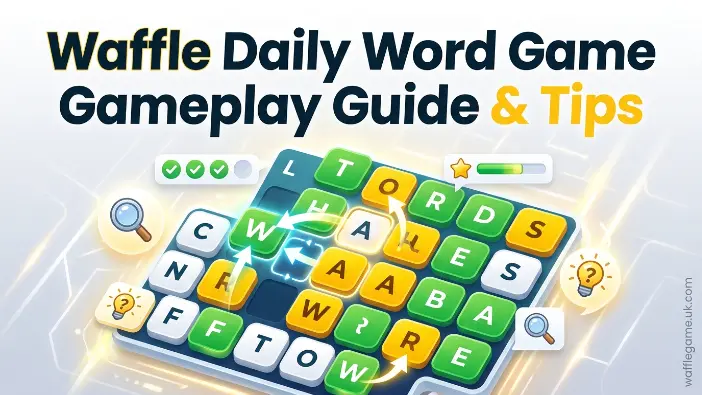
To play the Waffle Game, you start with a scrambled grid of letters arranged in a waffle-shaped pattern where each letter belongs to both a horizontal and vertical word. Your main goal is to rearrange these letters into correct words by swapping them between different positions. You can only make a limited number of swaps, so each move must be carefully planned. Correctly placed letters are usually highlighted to guide you during gameplay. By analyzing word patterns, using logical thinking, and focusing on intersecting letters, you gradually solve the entire puzzle. The game is completed when all words are correctly formed.
Basic Gameplay Instructions
- Start with a scrambled waffle-style grid of letters.
- Your goal is to form correct horizontal and vertical words.
- Observe the grid before making any moves.
- Use logical thinking instead of random guessing.
Drag-and-Swap Mechanism
- Select a letter and drag it to another position in the grid.
- Swapping two letters changes their positions instantly.
- Each swap affects both horizontal and vertical word alignment.
- Limited swaps make every move strategically important.
Correct vs Incorrect Placements
- Correct letters are highlighted, usually in green, showing proper placement.
- Incorrect letters remain unmarked or shown in neutral/yellow tones.
- Partially correct placements help guide future moves.
- Misplaced letters indicate the need for further swapping adjustments.
Understanding the Grid Layout
The Waffle Game grid is designed in a structured waffle-shaped pattern where letters are placed in a fixed arrangement. Each cell in the grid contains one letter, and every letter is part of both a horizontal and a vertical word. This overlapping structure is what makes the game more challenging, as players must consider multiple word directions at the same time while making each move.
The layout is carefully built so that some letters are already correctly positioned at the start, giving players useful hints. The remaining letters need to be swapped strategically to complete the puzzle. Blog because every letter connects two words, even a single change can affect the entire grid, making the understanding of the layout essential for solving the game efficiently.
Horizontal and Vertical Word Structure
- The Waffle grid contains words arranged in both horizontal and vertical directions.
- Each horizontal word runs left to right across a row of the grid.
- Each vertical word runs top to bottom through a column of the grid.
- Every letter is shared between one horizontal and one vertical word.
- A correct letter placement helps complete two words at the same time.
- Players must balance both directions while solving the puzzle.
- Focusing on only one direction can lead to incorrect placements in the other.
Color Indicators Explained
In the Waffle Game, color indicators play an important role in helping players understand the correctness of their moves. When a letter is placed in the right position, it is usually highlighted in green, showing that it correctly fits both the horizontal and vertical words. This immediate feedback helps players identify which parts of the grid are already solved and which areas still need attention.
Other colors, such as yellow or neutral tones, indicate that a letter is present but not in the correct position. This means the letter belongs somewhere else in the puzzle and needs to be swapped. These visual clues guide players step by step, reducing guesswork and encouraging logical thinking while solving the daily puzzle efficiently.
Green, Yellow, and Neutral Tile Meanings
- Green Tiles: Indicate that the letter is in the correct position and correctly fits both the horizontal and vertical words.
- Yellow Tiles: Show that the letter is part of the correct word, but placed in the wrong position and needs to be swapped.
- Neutral Tiles: Indicate that the letter is currently incorrect and does not fit in its present position.
- Green helps confirm solved parts of the puzzle and reduces confusion.
- Yellow guides players toward potential correct placements through repositioning.
- Neutral tiles signal areas that require full reconsideration and strategic swapping.
Waffle Game Rules You Must Know
Waffle Game follows a simple set of rules that make the puzzle both challenging and strategic. Players are given a waffle-shaped grid of scrambled letters and must rearrange them into correct horizontal and vertical words using a limited number of swaps. Each move matters because every letter is shared between two words, so one change can affect multiple outcomes. Correct placements are usually highlighted to guide progress, while incorrect ones require adjustment. The puzzle must be completed within the allowed moves, and a new challenge appears daily. Success depends on careful planning, pattern recognition, and logical thinking throughout gameplay.
Number of Moves Allowed
- Players are given a limited number of swaps to complete the entire puzzle.
- Each move must be used carefully to avoid running out before solving the grid.
- The number of allowed moves is designed to encourage strategic thinking.
- Efficient solving depends on minimizing unnecessary swaps.
Swap Limitations
- Only one swap between two letters can be made at a time.
- Swaps must be planned because each action affects both word directions.
- Random or repeated swapping reduces the chance of success.
- Some letters may already be locked in correct positions.
Winning Conditions
- The puzzle is won when all horizontal and vertical words are correctly formed.
- Every letter must be in its proper position in the grid.
- The solution must be completed within the allowed swaps.
- No incorrect placements should remain in the final grid.
Daily Puzzle Reset System
- A new Waffle puzzle is released every day for all players.
- Each daily puzzle is unique and cannot be replayed once solved.
- The reset system keeps the game fresh and engaging.
- Players return daily to solve a new challenge.
Best Waffle Game Strategies & Tips
The best Waffle Game strategies focus on careful planning, pattern recognition, and efficient letter placement. Start by identifying already obvious word patterns and prioritize fixing letters that clearly belong in specific positions. Always consider both horizontal and vertical words before making a swap, since each move affects two directions. Work from confirmed correct letters outward to reduce confusion and build structure step by step. Avoid random swapping, as it wastes valuable moves. Instead, analyze intersections where letters overlap to solve multiple words at once. With consistent practice, players improve speed, accuracy, and logical thinking, making daily puzzles easier to complete efficiently.
Start from Obvious Words
- Begin by identifying words that are easy to recognize in the grid.
- Look for common prefixes, suffixes, or familiar short words first.
- Solving obvious words helps create a strong base for the rest of the puzzle.
- Early correct placements reduce complexity in later moves.
Focus on Cross-Pattern Letters
- Pay attention to letters shared between horizontal and vertical words.
- Prioritize intersections because they affect two words at once.
- Correct placement of one letter can unlock multiple word solutions.
- Use cross-checking to confirm whether a move improves both directions.
Avoid Random Swaps
- Do not swap letters without a clear reason or strategy.
- Random moves waste limited attempts and create confusion.
- Every swap should improve at least one part of the grid.
- Logical thinking is more effective than guessing in solving the puzzle.
Beginner Tips
When starting the Waffle Game, beginners should focus on understanding the grid before making any moves. Take time to observe which letters already look correctly placed and use them as anchors for solving the rest of the puzzle. Starting with simple and obvious word patterns helps build confidence and reduces early mistakes. It is important to think slowly and avoid rushing, as careful planning leads to better results in limited swaps.
Another helpful tip is to always consider how each swap affects both horizontal and vertical words. Beginners should avoid random guessing and instead focus on logical placement based on visible patterns. Practicing regularly improves pattern recognition and helps players develop a natural understanding of word structures over time.
Simple Solving Approach
- Start by scanning the entire grid to understand the layout.
- Identify any clearly correct or almost correct words first.
- Use these confirmed letters as starting anchor points.
- Focus on solving one word at a time, rather than the whole grid at once.
- Check how each swap affects both horizontal and vertical words.
- Prioritize obvious placements before trying complex combinations.
- Avoid overthinking early moves to keep the process simple.
- Gradually build the puzzle step by step until completion.
Advanced Strategies
Advanced players in the Waffle Game focus on analyzing the full grid before making any moves. Instead of solving words individually, they study how each letter impacts both horizontal and vertical patterns simultaneously. This helps in identifying high-value swaps that can unlock multiple correct placements at once. Experienced players also prioritize intersections where letters influence two words, allowing them to reduce mistakes and improve efficiency throughout the puzzle.
Another advanced approach is working backward from already correct letters to deduce the remaining placements. Players often visualize possible word combinations in their minds before swapping, reducing unnecessary moves. They also avoid fixing only one word at a time and instead aim for balanced progress across the entire grid. This strategic thinking leads to faster completion and more consistent success in solving daily puzzles.
Pattern Recognition Techniques
- Identify common word patterns such as prefixes, suffixes, and repeated letter combinations.
- Look for familiar partial words that can hint at full word structures.
- Observe intersecting letters that connect both horizontal and vertical words.
- Compare possible word options mentally before making a swap.
- Use already correct letters as anchors to predict surrounding patterns.
- Spot repeating letter placements that often appear in English word structures.
Efficient Solving Methods
- Focus on solving the most obvious word first to reduce complexity.
- Make swaps that improve more than one word at a time.
- Work systematically across the grid instead of random guessing.
- Recheck intersections after every move to ensure progress.
- Prioritize moves that unlock multiple correct placements.
- Keep track of limited swaps to avoid unnecessary actions.
Common Mistakes Players Make
Common mistakes players make in the Waffle Game usually come from rushing and poor planning. Many beginners focus on random swapping instead of analyzing word patterns, which quickly wastes limited moves. Another common error is ignoring how each letter affects both horizontal and vertical words, leading to misplaced tiles that block progress later. Players also tend to overthink simple words and overlook obvious solutions, making the puzzle harder than it is. Not using already correct letters as anchors is another issue that slows solving speed. Successful gameplay requires patience, logical thinking, and careful observation rather than guesswork or unnecessary movement.
Overthinking Moves
- Players often spend too much time analyzing simple placements.
- This leads to delayed decisions and wasted moves in the game.
- Overthinking can confuse instead of improving accuracy.
- Simple word patterns are often overlooked due to unnecessary complexity.
Ignoring Cross-Letter Patterns
- Many players fail to notice how letters connect horizontally and vertically.
- Ignoring intersections reduces solving efficiency significantly.
- It prevents players from unlocking multiple words with a single move.
- Cross-pattern awareness is key to faster puzzle completion.
Random Swapping Without Logic
- Swapping letters without a strategy wastes limited moves quickly.
- Random actions rarely improve the grid structure.
- It often creates more incorrect placements instead of solutions.
- Logical planning is essential for consistent success in the game.
Why Waffle Daily Word Game is So Popular
Waffle Daily Word Game is so popular because it offers a perfect mix of simplicity, challenge, and daily engagement. Players enjoy solving a new puzzle every day, which keeps the experience fresh and exciting. The game combines vocabulary skills with logical thinking, making it both fun and mentally stimulating. Its unique waffle-shaped grid and swap-based mechanics set it apart from traditional word games. The satisfaction of completing a puzzle in limited moves adds to its addictive nature. Additionally, it appeals to all age groups and encourages regular brain exercise, making it a favorite among casual and competitive word puzzle players worldwide.
Brain Training Benefits
- Improves vocabulary and strengthens word recognition skills.
- Enhances logical thinking and problem-solving ability.
- Boosts memory retention through repeated pattern practice.
- Encourages faster decision-making under limited moves.
Daily Challenge Engagement
- Provides a fresh puzzle every day to maintain interest.
- Builds a consistent habit of mental exercise and focus.
- Keeps players motivated with short, achievable gameplay sessions.
- Increases engagement through daily progress and improvement.
Social Sharing Factor
- Allows players to share their results with friends easily.
- Creates friendly competition among word puzzle enthusiasts.
- Encourages discussion and strategy sharing in online communities.
- Builds a sense of achievement through public results.
Similar Games You Can Try
Waffle Daily Word Game is part of a growing family of popular word puzzle games that challenge players in different ways while keeping the same core idea of language-based problem solving. If you enjoy Waffle, you can also try Wordle, where you guess a hidden five-letter word using color clues, or Quordle, which takes the same idea but requires solving four words at once. Another great option is Dordle, a slightly easier version of Quordle where you solve two words simultaneously. Games like Connections focus more on grouping related words, adding a different kind of logical challenge. Together, these games offer daily brain exercise, vocabulary building, and addictive puzzle-solving fun for word game lovers worldwide.
Wordle
Wordle is one of the most popular daily word puzzle games where players must guess a hidden five-letter word within limited attempts. Each guess provides color-based feedback that helps identify correct letters and their positions. It focuses heavily on vocabulary, deduction, and logical elimination, making it simple yet highly addictive for daily play.
In Wordle, every attempt brings you closer to the correct answer through green, yellow, and gray indicators. This straightforward gameplay has made it a global phenomenon, inspiring many similar word puzzle variations and building a strong daily gaming habit among users of all ages.
Quordle
Quordle is a more advanced version of Wordle, where players must solve four different words simultaneously. Instead of focusing on one puzzle, users manage multiple grids at once, which increases difficulty and requires stronger multitasking and memory skills. It is designed for experienced word game players who want a greater challenge.
The game uses the same color-coded feedback system as Wordle, but each guess applies to all four boards. This makes strategic thinking essential, as every move must be carefully planned to avoid wasting limited attempts across multiple puzzles.
Dordle
Dordle offers a balanced challenge between Wordle and Quordle by requiring players to solve two words at the same time. It is ideal for users who find Wordle too easy but Quordle too difficult. The dual-grid format enhances problem-solving and encourages smarter guessing strategies.
Each guess affects both words, making efficiency very important. Players must analyze feedback carefully to identify correct letters for both grids, which adds an extra layer of logic and engagement to the gameplay experience.
Other Word Puzzle Apps
There are many other word puzzle apps available that offer unique gameplay styles beyond traditional guessing games. These include crossword-based apps, anagram solvers, and daily brain training games that focus on vocabulary and pattern recognition. They provide variety for users who enjoy language challenges.
Many of these apps include features like timed puzzles, multiplayer modes, and daily challenges to keep players engaged. Together, they help improve vocabulary, cognitive skills, and overall mental agility while offering entertaining alternatives to mainstream word games.
Frequently Asked Questions
What is the Waffle Daily Word Game?
The Waffle Daily Word Game is a word puzzle where players rearrange scrambled letters in a waffle-shaped grid to form correct horizontal and vertical words. It is played daily and focuses on logic, vocabulary, and pattern recognition.
How do you win the Waffle game?
You win the game by correctly arranging all letters into valid words within the allowed number of swaps. Every horizontal and vertical word must be solved for a successful completion.
Is Waffle harder than Wordle?
Waffle is generally considered more strategic than Wordle because it involves multiple intersecting words and requires swapping letters instead of guessing a single hidden word.
Can I play Waffle on mobile?
Yes, the Waffle game is browser-based and works smoothly on both mobile devices and desktop browsers without requiring any installation.
How often does the Waffle puzzle change?
A new Waffle puzzle is released every day, giving players a fresh challenge and encouraging daily engagement with the game.
Conclusion
Waffle Daily Word Game gameplay offers a unique blend of fun, logic, and daily mental challenge that makes it stand out among modern word puzzles. Its interconnected grid system encourages players to think strategically, as every swap impacts multiple words at once. This creates a more engaging and thoughtful experience compared to traditional guessing games.
By understanding the rules, using smart strategies, and avoiding common mistakes, players can significantly improve their solving speed and accuracy. The game not only enhances vocabulary and pattern recognition but also builds consistent problem-solving skills through daily practice. Overall, Waffle is an enjoyable and rewarding brain-training game for word puzzle enthusiasts of all levels.