
Welcome to WaffleGame, where the Traitors board game brings the suspense, strategy, and deception of the popular TV series to your tabletop. Players take on secret roles as Faithful or Traitor and work together on missions while trying to identify who is secretly sabotaging the group. With a focus on communication, deduction, observation, and critical thinking, every discussion and vote can change the game. It is a fun choice for families, friends, and board game fans.
Whether you’re new to social deduction games or enjoy hidden role games, the Traitors board game is easy to learn and exciting to play. In this guide, you’ll find the rules, gameplay tips, useful strategies, and common mistakes to avoid. Whether you’re playing as a Faithful or Traitor, you’ll have the information needed for an enjoyable game night.
What Is The Traitors Board Game?
The Traitors board game is an exciting tabletop experience that combines teamwork, deception, and strategy. Inspired by the popular TV format, players receive secret roles and must complete tasks while trying to identify the hidden Traitors. Success depends on communication, observation, deduction, and smart decision-making rather than luck. As a fun social deduction game, it encourages players to question suspicious behavior, build alliances, and analyze every move.
Each game of the Traitors board game feels different because players must adapt and decide who they can trust. Hidden roles, clever strategies, and unexpected betrayals keep everyone engaged throughout the game. Whether you’re playing with friends, family, or fellow board game fans, this hidden role game offers plenty of opportunities for bluffing, discussion, and strategic play.
Inspired by the Hit TV Show
The Traitors board game is inspired by the internationally popular television series The Traitors, known for its mix of strategy, mystery, deception, and suspense. Like the show, the game challenges players to decide who they can trust while completing missions and working toward victory. Every discussion, decision, and vote can expose a hidden Traitor or put an innocent Faithful at risk.
The tabletop version simplifies some elements of the TV format while keeping its excitement and suspense. Players will find familiar features such as secret roles, group discussions, alliances, and voting rounds, while newcomers can easily enjoy the game without watching the show. With its engaging hidden role game mechanics, every session offers new strategies, unexpected twists, and plenty of surprises.
Who Created the Game?
The Traitors board game is an official adaptation of the popular television franchise, bringing its suspense, strategy, and deception to the tabletop. Designed for friends and families, the game combines easy-to-understand rules with strategic choices, making it suitable for casual players as well as experienced board game fans.
The game is designed to recreate the tension and excitement of the TV series through deception game mechanics, secret roles, cooperative missions, and group discussions. Players use observation, persuasion, deduction, and critical thinking to uncover hidden Traitors while completing objectives. With simple gameplay and engaging decisions, each session delivers suspense, surprises, and plenty of opportunities for strategic play.
Who Should Play It?
The Traitors board game is ideal for players who enjoy conversation, teamwork, deduction, and strategic deception. It works well for families with older children, friends, board game groups, and fans of mystery-themed entertainment. With everyone involved in missions, discussions, and voting, the game creates an interactive and social experience from beginning to end.
Whether you’re new to bluffing games or enjoy strategy board games, the Traitors board game offers an enjoyable challenge for different skill levels. Beginners can quickly learn the basics, while experienced players can use alliances, deduction, and deception to develop deeper strategies. Since hidden roles can change each time you play, every session feels different and offers plenty of replay value.
Read Also: Dispatch Game
What’s Included in the Box?
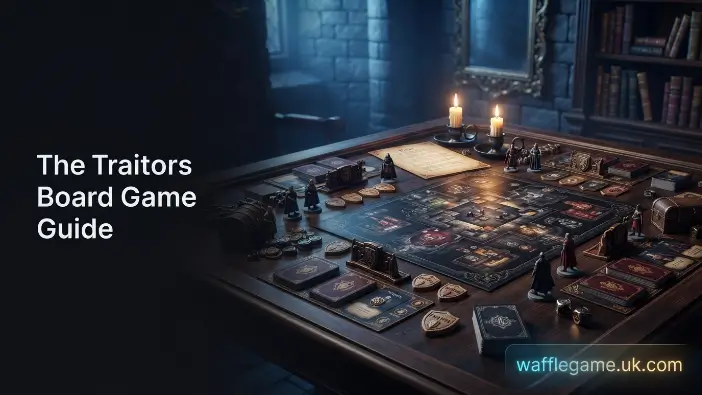
Before starting the Traitors board game, it helps to understand the components included in the box and how they support gameplay. Each element has a specific role, from assigning secret identities to managing missions and voting rounds. Together, these components create the suspense, strategy, and interaction of a social deduction game while keeping each round organized and easy to follow.
Game Components
The Traitors board game includes various components designed to make gameplay organized, interactive, and engaging. Depending on the edition, the box may contain role cards, mission cards, voting tokens, gold tokens, shields, player markers, and a rulebook. Each piece helps manage missions, discussions, votes, and eliminations throughout the game.
The themed artwork and clearly labeled components also make the game easy to understand for new and experienced players. As an engaging strategy board game, its simple components support deeper gameplay while adding to the suspense and atmosphere of each session.
Role Cards
Role cards are one of the most important components of the Traitors board game because they determine each player’s secret identity. At the beginning of the game, every participant receives a role card that identifies them as either a Faithful or a Traitor. These identities are kept secret from the other players, creating the mystery, uncertainty, and suspense that make the game so engaging.
Because the Traitors know who their fellow Traitors are while the Faithful must uncover them, players need to rely on observation, communication, deduction, and careful decision-making. These hidden role game mechanics make every conversation and vote meaningful, as a single decision can influence the outcome of the game. As a result, role cards form the foundation of the Traitors board game, adding strategic depth and ensuring that each session feels different.
Mission Cards
Mission cards introduce cooperative challenges that players must complete together during each round of the Traitors board game. They promote teamwork while giving Traitors opportunities to secretly disrupt progress without revealing their identities. Successful missions may provide useful clues that players can consider during later discussions and voting rounds.
Even simple missions can create suspicion and debate. A failed mission does not always reveal who caused it, so players must pay attention to everyone’s actions and behavior. This combination of teamwork, uncertainty, and hidden intentions keeps the deception game exciting and unpredictable.
Gold, Shields, and Accessories
Many editions of the Traitors board game include themed accessories such as gold tokens, shields, voting markers, and player reference cards. Gold tokens may represent rewards from successful missions, while shields can offer protection or special advantages depending on the edition. These components help track progress while adding visual appeal to the game.
Themed accessories also strengthen the connection to the television series and make the experience more immersive. Along with the game’s bluffing game mechanics, they add to the suspense, strategy, and deception that keep every round engaging and memorable.
The Traitors Board Game Rules Explained
Understanding the rules of the Traitors board game helps create a smooth and enjoyable gaming experience. While the basic rules are easy to learn, hidden identities, player interactions, and strategic decisions add greater depth. Each round generally includes setup, missions, discussions, and voting, giving both Faithful players and Traitors clear objectives. As a social deduction game, success depends largely on observation, communication, and smart decisions.
The structured gameplay gives every player an important role. Faithful players must cooperate while watching for suspicious behavior, while Traitors must protect their identities and influence the group without being discovered. This balance of teamwork and deception keeps each round engaging, unpredictable, and exciting.
Game Setup
Setting up the Traitors board game takes just a few minutes and helps create a smooth start. Place the role cards, mission cards, voting tokens, and other components where everyone can easily reach them. Shuffle the role cards and deal one face down to each player. Everyone should secretly check their role and keep it hidden throughout the game.
Once roles are assigned, arrange the remaining components according to the rulebook. For new players, briefly explain the basic game sequence before starting. A clear setup minimizes confusion and lets everyone focus on the discussions, strategies, and deception that make this hidden role game exciting.
Choosing the Traitor
In the Traitors board game, Traitors are randomly assigned through secret role cards, so players do not know who will receive the role before the game begins. Depending on the edition and number of players, one or more participants may become Traitors, while everyone else plays as Faithful. Traitors typically know who their fellow Traitors are, giving them a strategic advantage from the start.
Random role assignment keeps every session fresh and unpredictable. Whether playing as a Faithful or Traitor, players must adapt their strategies while managing trust, suspicion, and deception. This hidden-role element adds replay value and makes every game different.
Mission Phase
The mission phase is an important part of the Traitors board game, where players work together to complete objectives while secretly pursuing their own goals. Faithful players want missions to succeed, while Traitors must decide when to interfere without revealing their identities.
Missions can also provide clues that influence later discussions and decisions. A failed mission may create suspicion but usually does not identify the responsible player. This encourages everyone to watch behavior, conversations, and choices carefully, keeping the strategy board game engaging and unpredictable.
Round Table Discussions
After each mission, players gather for the famous Round Table discussion, one of the most engaging phases of the Traitors board game. Players can share observations, defend their choices, question others, and discuss who they believe may be a Traitor. These conversations can become intense as everyone tries to build trust while directing suspicion toward others.
For Faithful players, the discussion is a chance to compare information and examine suspicious behavior. Traitors can use the conversation to influence opinions, redirect suspicion, and create doubt. This mix of deduction, persuasion, and deception makes the bluffing game interactive, strategic, and unpredictable.
Voting Process
After the discussion, players vote for the person they believe is most likely to be a Traitor. Each player casts a vote, and the participant with the most votes is eliminated according to the rules of the edition being played. Depending on the version, the eliminated player’s role may be revealed immediately or later in the game.
Voting is a crucial part of the Traitors board game because each decision can affect the balance between Faithful players and Traitors. Identifying a Traitor can help the Faithful, while eliminating an innocent player may benefit the Traitors. Careful observation, reasoning, and teamwork are therefore important in this social deduction game.
Winning Conditions
The Traitors board game ends when either the Faithful or Traitors achieve their objective. Faithful players must identify and eliminate the Traitors before they gain control of the game. Working together, analyzing clues, sharing suspicions, and making careful voting decisions are essential to their success.
Traitors, meanwhile, aim to remain hidden until they equal or outnumber the remaining Faithful players, depending on the edition’s rules. These victory conditions keep the tension high and encourage strategic thinking throughout the game, making every hidden role game session engaging and unpredictable.
Special Rules
Some editions of the Traitors board game include optional rules and special mechanics that add variety to each session. These may include shield tokens for temporary protection, advanced mission cards with unique objectives, or event cards that introduce unexpected twists. Such features can give experienced players new strategies to explore.
For the best experience, beginners should start with the standard rules and learn the core gameplay first. Once everyone is comfortable, optional mechanics can make the game more challenging and replayable while maintaining its focus on trust, strategy, observation, and deception.
How to Play The Traitors Board Game Step by Step
Learning how to play the Traitors board game is simple once you understand the round structure. The game combines teamwork, discussion, missions, and strategic voting, while hidden roles create an atmosphere of trust and suspicion.
Faithful players must work together to identify the Traitors, while Traitors secretly influence the group and protect their identities. This balance of teamwork and deception makes every game exciting and unpredictable.
Starting the Game
To begin The Traitors, shuffle the role cards and deal one face down to each player. Everyone secretly checks their role Faithful or Traitor and keeps it hidden. Set up the mission cards, voting tokens, and other components, then review the basic rules.
The game begins with the opening mission, where players start observing each other’s behavior. As hidden roles and secret agendas come into play, trust, suspicion, and strategy quickly shape the game.
Completing Missions
During each mission, players work together toward a shared goal. Faithful players aim for success, while Traitors secretly try to influence or disrupt the mission without raising suspicion.
The outcome of each mission can reveal important clues. Success may build trust, while failure can increase suspicion and spark discussions about who might be responsible. These challenges make every decision important and shape future votes and alliances.
Building Trust
Trust plays a key role in The Traitors. Players build credibility through discussions, decisions, and their actions during missions. Faithful players can use trust to form alliances, while Traitors may try to gain others’ confidence without revealing their identities.
Players who explain their reasoning, stay calm, and contribute to discussions may seem trustworthy but appearances can be misleading. This uncertainty keeps the bluffing game tense, unpredictable, and engaging until the final round.
Spotting Suspicious Behavior
One of the most exciting parts of The Traitors is observing player behavior to identify hidden Traitors. Players can look for inconsistent statements, sudden opinion changes, unusual votes, or attempts to distract the group. These clues can help guide decisions during voting rounds.
However, suspicious behavior does not always mean guilt. Innocent Faithful players can also appear nervous or uncertain. Looking at patterns across multiple rounds makes the deception game more challenging, engaging, and rewarding.
Ending the Game
The Traitors continues through missions, discussions, and voting rounds until one team achieves its objective. Faithful players try to eliminate the Traitors, while Traitors work to stay hidden and gain enough influence to win.
The final rounds are often the most suspenseful, as players rely on everything they have observed to make crucial decisions. With different outcomes possible each time, the game remains unpredictable and highly replayable.
Best Strategies for Faithful Players
Winning as a Faithful in The Traitors requires more than guessing. Players should rely on careful observation, logical reasoning, and communication to identify suspicious behavior. Missions, discussions, and voting rounds can all provide useful clues.
Rather than judging someone based on one action, players should look for patterns across multiple rounds. Sharing observations, questioning inconsistencies, and making thoughtful votes can help narrow down the possible Traitors and improve the team’s chances of winning.
Reading Player Behavior
A useful strategy in The Traitors is to focus on patterns rather than a single action. One mistake or unusual decision does not prove someone is a Traitor, but repeated inconsistencies, frequent opinion changes, or avoiding clear decisions may provide stronger clues.
Players should also avoid judging others based on personality or speaking style. Instead, compare their actions and decisions across several rounds. This objective approach helps players make more informed decisions in the hidden-role game.
Managing Discussions
Group discussions are an important tool for Faithful players in The Traitors. Instead of making random accusations, players should ask clear questions about mission results, voting choices, and suspicious behavior. Allowing everyone to explain their decisions can reveal useful clues.
Listening carefully is just as important. Players should notice how others respond to questions and whether they avoid answering or redirect suspicion. Keeping discussions focused on evidence and reasoning can help the group identify deception more effectively.
Avoiding Common Mistakes
Many new players struggle in The Traitors by making emotional decisions instead of relying on evidence. Judging someone for being nervous, quiet, or outspoken can lead to an innocent Faithful being eliminated. Instead, focus on behavior, mission results, voting patterns, and information gathered throughout the game.
Another mistake is making accusations too early. Without enough evidence, this can confuse the group and give Traitors more opportunities to manipulate discussions. Staying patient, gathering clues, and adapting to new information can lead to better decisions.
Best Strategies for Traitors
Playing as a Traitor in The Traitors is exciting because your goal is to appear trustworthy while secretly influencing the game. Success depends on managing suspicion, participating naturally, and knowing when to cooperate or create uncertainty.
- Blend in: Participate naturally without drawing unnecessary attention.
- Build trust: Support reasonable ideas and share useful observations.
- Create doubt: Ask thoughtful questions without making obvious accusations.
- Vote carefully: Keep your voting choices consistent with the discussion.
- Guide discussions: Share logical points without trying to control the entire conversation.
Is The Traitors Board Game Worth Buying?
If you enjoy suspense, teamwork, strategy, and deception, The Traitors can be an exciting addition to your game collection. Every decision, discussion, and vote can change the game, keeping players engaged from start to finish.
With hidden roles and unpredictable choices, each session offers a different experience. Whether playing with friends or family, this social deduction game provides an entertaining mix of mystery, cooperation, and strategic thinking.
Pros
One of the biggest strengths of The Traitors is its ability to keep players involved throughout the game. Hidden identities, cooperative missions, and strategic discussions create constant uncertainty and make every decision meaningful. The simple rules are easy for beginners to learn, while the deeper strategy keeps experienced players engaged.
The game also combines strategy with social interaction, requiring observation, communication, and deduction. Since roles, alliances, and decisions change each session, every game feels different and gives players plenty of reasons to play again.
Cons
While The Traitors offers plenty of excitement, it may not suit everyone. The game relies heavily on discussion, interaction, and social deduction, which may be less appealing to players who prefer traditional strategy games or quieter gameplay. Larger groups can also add more complexity through deception, alliances, and discussions.
Some editions may also include player elimination, meaning eliminated players have less involvement for the rest of the game. Despite this, the game remains a fun choice for groups who enjoy deduction, conversation, and unpredictable gameplay.
Replay Value
The Traitors offers strong replay value because every game can unfold differently. Randomly assigned roles, changing strategies, alliances, and voting decisions create new challenges each time, keeping the gameplay fresh and unpredictable.
As players become familiar with each other’s strategies, they can develop new tactics and find creative ways to build trust or create suspicion. This variety makes the game a great choice for regular game nights and long-term entertainment.
Who Will Enjoy It Most?
The Traitors is a great choice for players who enjoy communication, deduction, deception, and strategy. Fans of mystery and psychological games can especially enjoy the suspense of hidden roles and group discussions. It can also be a fun option for families with older children, friends, and board game groups.
Whether you’re new to bluffing games or experienced with social deduction, the game offers an engaging challenge for different skill levels. Its lively discussions, unexpected twists, and strategic gameplay make it a fun choice for memorable game nights.
The Traitors Board Game vs Other Social Deduction Games
The Traitors shares similarities with other popular social deduction games, but each game has its own style and mechanics. Some feature complex character abilities, while others focus on simple rules and quick discussions. Comparing gameplay, player interaction, and overall experience can help you choose the right option for your group.
Compression Table
| Feature | The Traitors Board Game | Blood on the Clocktower | Secret Hitler | Werewolf | Mafia | Among Us (Party Adaptation) |
| Game Type | Social deduction game | Hidden role game | Political deduction | Party deduction | Classic deduction | Team deduction |
| Recommended Players | 4–8+ | 5–20 | 5–10 | 6–20 | 6–20 | 4–15 |
| Average Play Time | 45–60 minutes | 60–120 minutes | 30–60 minutes | 20–45 minutes | 20–45 minutes | 30–60 minutes |
| Difficulty Level | Easy to Moderate | Advanced | Moderate | Easy | Easy | Easy |
| Hidden Roles | Yes | Yes | Yes | Yes | Yes | Yes |
| Cooperative Missions | Yes | No | Limited | No | No | Yes |
| Voting & Eliminations | Yes | Yes | Yes | Yes | Yes | Yes |
| Strategy Depth | High | Very High | High | Moderate | Moderate | Moderate |
| Replay Value | Excellent | Excellent | High | High | High | High |
| Best For | Fans of strategy and TV show adaptations | Experienced gamers | Medium-sized groups | Large parties | Casual gatherings | Friends and family game nights |
Overall, the Traitors board game stands out for blending cooperative missions with hidden identities, creating a balance of teamwork and deception that many other games don’t offer. While titles like Blood on the Clocktower provide greater complexity and games such as Werewolf and Mafia emphasize fast-paced deduction, The Traitors delivers a cinematic experience inspired by the popular television series. Its accessible rules, engaging discussions, and strong replay value make it an excellent choice for both beginners and experienced fans of bluffing games.
Tips for Hosting the Perfect Traitors Game Night
Hosting a successful The Traitors game night involves more than just dealing the cards. Choosing a suitable group size, creating a comfortable setting, and explaining the rules clearly can make the experience more enjoyable.
- Invite 6–8 players: A balanced group can create engaging discussions while giving everyone plenty of opportunities to use strategy, deception, and teamwork.
- Arrange comfortable seating: Set up chairs in a circle so players can easily see one another and participate in discussions and voting.
- Choose a quiet space: Minimize distractions so everyone can focus on conversations, observe player behavior, and stay engaged.
- Explain the rules: Make sure all participants understand the objectives, voting process, and responsibilities associated with their roles before starting.
- Set simple house rules: Agree on fair guidelines for handling disagreements, interruptions, and other situations that could affect the flow of the game.
- Encourage respectful discussion: Give everyone an opportunity to share their opinions without interruptions, creating a friendly and welcoming atmosphere.
Frequently Asked Questions
How many players can play the Traitors board game?
The traitors board game is best played with 4–8 players, offering the ideal balance for an exciting social deduction game.
How long does a game last?
A typical game takes 45–60 minutes, depending on the number of players and discussion time.
Is the Traitors board game beginner-friendly?
Yes, the rules are easy to learn, making it suitable for both beginners and experienced players.
Is every game different?
Yes. Random roles and player interactions make every session unique and highly replayable.
Is the Traitors board game worth buying?
Absolutely. It’s an excellent choice for anyone who enjoys hidden role games, strategy, and social interaction.
Conclusion
The Traitors combines strategy, teamwork, deception, and social interaction to create an exciting experience in every session. Its easy-to-learn rules, engaging missions, and suspenseful discussions make it accessible to beginners, while the hidden roles and strategic decisions provide plenty of depth for experienced players. Throughout the game, players must observe behavior, build trust, question decisions, and use deduction to identify the hidden Traitors.
Whether you’re a fan of the TV series or simply enjoy social deduction and hidden-role games, The Traitors can be an entertaining choice for your next game night. With changing roles, different strategies, and unpredictable outcomes, no two sessions have to feel the same. Its replayability and interactive gameplay make it a fun way to bring friends and family together for a memorable gaming experience.